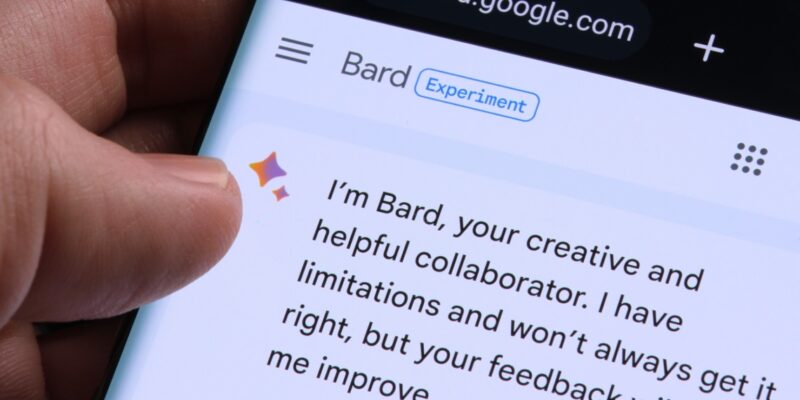

Google may be planning to integrate its AI-powered chatbot, Bard, into Google Messages. While this opens up new, exciting possibilities, it has also sparked privacy concerns as Bard will be able to read and analyze users’ private messages.
Android tech blogger Assembler Debug posted a series of photographs on X on Jan. 19, showing that Bard is coming to Google Messages. While Google hasn’t confirmed this or set a timeline for its release, a spokesperson for the company told Forbes that Bard will only access users’ messages with their consent.
“Bard’s arrival in Messages presents a significant step forward in AI-powered communication on Android. It offers exciting possibilities for personalized, accessible, and creative messaging experiences,” Bard told VPNOverview.
Concerns Over Bard Integration
There are many potential benefits of having Bard in Google Messages. For example, it can translate messages and allow people who don’t speak the same language to communicate easily. It can also help users craft witty responses. But at what cost?
While Bard explained that it will only analyze messages for context and tone to tailor responses, some users say it’s a line too far.
“Really? Why is it that I don’t think people would want this in the long run? Isn’t PM [private messages] a way to communicate privately with our chosen recipients? And this machine is going to tell us what to say so we don’t have to think?!?” blogger Rene Volpi Jr. wrote in a post on Medium.
Meanwhile, one Reddit user pointed out that Google Messages’ new feature may violate the European Union’s GDPR if it’s on by default. “The EU is going to eat them alive if it isn’t opt-in by default,” the user wrote.
Adding to these fears are concerns about Google’s data handling. According to the Bard Privacy Help Hub, Google collects Bard data about your conversations, location, and user feedback. It stores this data for up to 18 months, and there’s a possibility it will be subject to human review.
Even when you turn off Bard Activity — a record of your interactions linked to your account — Google keeps your conversations for up to 72 hours. While there’s an option to delete your Bard history manually, not everything is scrapped.
“Bard conversations that have been reviewed or annotated by human reviewers (and related data like your language, device type, location info, or feedback) are not deleted when you delete your Bard activity because they are kept separately and are not connected to your Google Account. Instead, they are retained for up to three years,” Google explained.
How to Protect Your Privacy When Using Bard, Other AI Chatbots
Since Bard hasn’t been officially added to Messages yet, we don’t know what privacy options Google will make available to users. However, when we asked Bard about the ways users can take control of their privacy, it said:
- Mute Bard Conversations: If Bard’s suggestions or responses become intrusive in a chat, users can mute the thread, silencing Bard for that specific conversation.
- Disable Bard Extensions: Users can disable any Bard extensions they’ve activated within Messages, such as connections to Gmail or Drive, to prevent Bard from accessing and using data from those accounts.
- Uninstall the Google Messages Update: For those who prefer not to interact with Bard, uninstalling the latest update of Google Messages is an option. This step, however, also means losing access to other new features and improvements.
In addition to these, here are some general tips to safeguard your privacy when using AI chatbots like Bard:
- Regularly review the permissions you’ve granted to each app, including Google Messages. Be cautious of apps requesting access to your messages, contacts, or other personal data.
- Restrict permissions that seem unnecessary for the app’s functionality.
- Before sending any AI-generated suggestions, review them to ensure they align with your intended message and do not disclose sensitive information.
- For highly confidential conversations, use messaging apps that offer end-to-end encryption, such as Signal or WhatsApp. While Bard may offer some privacy protections, it may not equate to end-to-end encryption for message content.
You can learn more about how to safeguard your privacy when using Google’s products in our guide to what Google knows about you.
For more news, follow us on X (Twitter), Threads, and Mastodon!