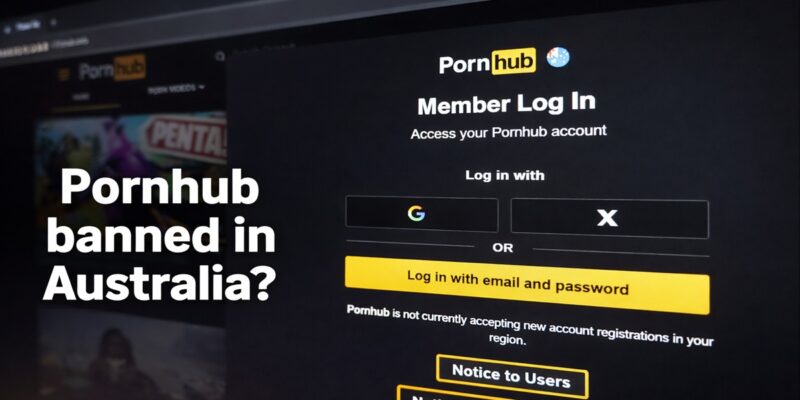
- Is Pornhub really blocked in Australia?
- The shift in online adult content access
-
Understanding Australia’s new age verification laws
- The Online Safety Act and its evolution
- The role of the eSafety Commissioner and Julie Inman Grant
- Age-Restricted material codes: what they are and who they affect
- How these laws impact pornography websites
- Why porn sites are blocked: the reason for the new regulations
- Protecting minors: addressing concerns around child sexual abuse and online safety
- Mitigating harms: beyond child protection
- Regulatory standards and digital duty of care legislation
- Learning from international precedents: US States, France, and the UK
- How age verification works: technologies and implementation
- The immediate impact on Australians and Pornhub access
- Bypassing the blocks: the role of VPNs (Virtual Private Networks)
- Legal and privacy implications of bypassing age verification
- The broader societal and industry impact
- International precedents and lessons learned
- Looking ahead online age verification
- Conclusion
- More from VPNOverview
Australia is undergoing a significant shift, particularly concerning access to adult content. In response to evolving online safety regulations, major pornography websites, most notably Pornhub, have proactively blocked access for users in Australia. This move is a direct consequence of new age verification laws that compel online platforms to implement stricter controls on who can view explicit material. These changes are not merely an inconvenience; they represent a fundamental alteration in how Australians interact with a significant portion of the internet, bringing issues of online safety, user privacy, and digital freedoms to the forefront. Understanding these new age verification laws, their implications for users and platforms, and the potential avenues for access is crucial for anyone navigating the Australian internet today.

Is Pornhub really blocked in Australia?
Pornhub and other major adult sites like RedTube and YouPorn have chosen to block access for users within Australia. This isn’t a result of a direct government takedown order forcing the entire site offline. Instead, it’s a strategic business decision made by the parent company, Aylo (formerly MindGeek), in anticipation of and reaction to Australia’s new age verification laws. Facing significant penalties and regulatory scrutiny under the updated Online Safety Act, these platforms have opted to restrict access for Australian users rather than implement the mandated age verification technologies, at least for now. This means that while the websites technically still exist, their content is effectively inaccessible to those browsing from within Australia.
The shift in online adult content access
This development marks a profound change in the accessibility of adult content for Australians. For years, accessing pornography websites has been largely unrestricted, a norm that has shaped user expectations and online habits. The introduction of mandatory age verification requirements, spearheaded by the eSafety Commissioner, signifies a deliberate governmental effort to introduce barriers to age-restricted material. This goes beyond a mere technical inconvenience; it touches upon fundamental questions about user privacy, freedom of expression, and the evolving regulatory framework governing the internet in Australia. The shift compels users to reconsider their online activities and the measures they employ to access information and entertainment.
Understanding Australia’s new age verification laws
Australia’s regulatory approach to the internet has tightened considerably, with a focus on enhancing online safety and providing greater protection for vulnerable individuals, especially minors. Central to this evolution are the new age verification laws designed to control access to age-restricted material, which have led to significant changes in how certain online platforms operate within the country.
The Online Safety Act and its evolution
The foundational legislation governing this new era of online regulation is the Online Safety Act 2021. Initially enacted to combat issues like cyberbullying and illegal online content, the Act has been progressively amended and expanded. Crucially, it now encompasses provisions and allows for the creation of associated online safety codes that mandate age verification for websites hosting explicit material. This evolution reflects a clear governmental intent to increase accountability for online platforms and establish a more robust framework for digital governance, empowering regulators with tools to enforce these standards.
The role of the eSafety Commissioner and Julie Inman Grant
At the vanguard of enforcing these new age verification laws is the eSafety Commissioner, an independent statutory regulator tasked with overseeing online safety in Australia. The current Commissioner, Julie Inman Grant, has been a prominent advocate for enhanced online protections, frequently highlighting the disparity between online freedoms and the safeguards present in the physical world. Her office is instrumental in developing and implementing the online safety codes that compel adult sites and pornography websites to implement effective age verification mechanisms. The Commissioner’s office has the authority to impose substantial penalties on platforms that fail to comply, a factor that has driven companies like Aylo to preemptively block access for Australian users.
Age-Restricted material codes: what they are and who they affect
The Age-Restricted Material Codes, developed under the umbrella of the Online Safety Act, are the specific regulatory instruments that dictate how adult sites and pornography websites must manage access to their content. These codes mandate the implementation of robust age verification technologies to ensure that individuals below a certain age cannot view sexually explicit material. The primary entities affected are the platforms themselves, which are now legally obliged to take responsibility for restricting access for minors. This places the onus on website operators to deploy effective age checks, rather than relying solely on users to self-regulate or governments to block individual sites.
How these laws impact pornography websites
The ramifications of these age verification laws for adult sites and pornography websites are substantial. These platforms are now legally required to implement effective age verification systems to continue offering unrestricted access to their content in Australia. The penalties for non-compliance are significant, including substantial fines. Consequently, many prominent platforms, including those under the Aylo umbrella, have chosen to proactively block access for users located in Australia. This approach circumvents the complex and potentially costly task of implementing varied age verification technologies across their vast content libraries, allowing them to maintain compliance with the spirit of the age verification laws without directly engaging with the verification process itself.
Why porn sites are blocked: the reason for the new regulations
The implementation of stringent age verification laws in Australia is driven by a comprehensive set of concerns aimed at fostering a safer online environment for all Australians. The government’s stated rationale extends beyond the protection of children to encompass a broader vision of digital responsibility and accountability for online platforms. This move is part of a global trend towards greater regulation of the internet to address perceived societal harms.
Protecting minors: addressing concerns around child sexual abuse and online safety
A primary impetus behind the age verification laws is the critical need to safeguard children. Statistics from the eSafety Commissioner underscore the vulnerability of young people online: a significant percentage of Australian children aged 10-17 report encountering sexual images or videos online, and many engage with social media platforms from a young age. The government views effective age verification as a vital tool to prevent minors from accessing pornography and other explicit content, thereby mitigating their risk of exposure to exploitation, grooming, and the myriad harms associated with such content. Preventing access to child sexual abuse material is a paramount objective.
Mitigating harms: beyond child protection
The scope of Australia’s online safety regulations extends beyond the direct protection of minors. The Online Safety Act embodies the concept of a “digital duty of care,” obligating websites and online services to proactively identify, assess, and mitigate a spectrum of potential harms to their users. This includes not only illegal content but also “lawful but awful” material – content that, while not illegal, can still cause significant distress or harm. By mandating age verification, regulators aim to reduce the overall prevalence and impact of harmful online content, including material that could contribute to disordered eating, self-harm content, or perpetuate harmful sexual scripts and gender stereotypes.
Regulatory standards and digital duty of care legislation
The push for age verification laws is indicative of a broader trend towards elevating regulatory standards for websites and online platforms. The concept of digital duty of care legislation requires these entities to proactively manage risks associated with their services. For pornography websites and other adult sites, this translates directly into the requirement to implement effective age verification systems. This approach shifts the onus of responsibility from individual users to the platforms that host and distribute content, aiming for systemic improvements in online safety by ensuring accountability.
Learning from international precedents: US States, France, and the UK
Australia is not an outlier in its pursuit of age verification for online adult content. Several US states, including Florida, have enacted similar legislation, though many have faced significant legal challenges and court injunctions citing freedom of speech concerns. In the UK, the regulator Ofcom is actively implementing stricter online safety measures under its Online Safety Act, which includes provisions for age verification. France has also explored various strategies to regulate access to pornography. These international precedents provide crucial case studies, illuminating the potential effectiveness and the considerable challenges associated with implementing such regulations, including technical feasibility, privacy concerns, and the inevitability of circumvention attempts.
How age verification works: technologies and implementation
Implementing effective age verification on a large scale presents a complex interplay of technical challenges, user experience considerations, and privacy imperatives. The mandated age checks aim to create a more controlled environment for accessing age-restricted content, but the methods employed raise important questions.
Different approaches to age assurance
The concept of “age assurance” encompasses a range of methods designed to verify a user’s age. These vary in their rigor and the data they require. Common approaches include:
- Government-Issued ID Upload: Users are asked to upload a scan or photo of official identification, such as a driver’s license or passport. While highly accurate, this method raises significant privacy concerns due to the sensitive personal information involved.
- Third-Party Verification Services: Specialized companies can be engaged to verify identities. These services often cross-reference user data with existing databases or may require users to upload identification.
- Digital Identity Wallets: With the rise of digital IDs and digital wallets, users might be able to verify their age using credentials stored securely on their devices. This approach could offer a more privacy-conscious solution, allowing users to share only the necessary verified attribute (e.g., “over 18”) without revealing other personal details.
- Facial Recognition Technology and Biometrics: Some emerging age-verification technologies utilize facial recognition or other biometric data. However, these methods are often less reliable, can be susceptible to spoofing, and raise even greater privacy concerns due to the nature of the data collected.
- Self-Declaration with Verification: A simpler, though less secure, method involves users declaring their age. This is often supplemented by cookies or other tracking mechanisms, but it is easily circumvented and generally not considered sufficient for meeting stringent regulatory standards. The goal is to move beyond simple self-declaration to more robust age checks.
The challenge of verification: user experience vs. regulatory compliance
Striking a balance between robust regulatory compliance and a seamless user experience is one of the most significant challenges in implementing age verification. Requiring users to upload government IDs or engage in complex verification processes can be a substantial barrier. As highlighted by research from institutions like the New America think tank, stringent age verification requirements can disproportionately affect certain user groups, potentially leading to a “chilling effect” on access to protected speech. Users may abandon the verification process if it is too cumbersome, leading to compliance issues for websites and frustration for the end-user.
Privacy implications of age checks and sharing personal information
The most prominent concern surrounding age verification is privacy. When users are compelled to provide personal information – including date of birth, address, or copies of photo identification – this data becomes a potential target for breaches or misuse. There is an inherent risk that sensitive information submitted to adult sites or third-party verification services could be compromised. The collection of such data by pornography websites or their partners raises critical questions about data storage, security, and potential sharing, creating a significant privacy risk for every user involved in these age checks. This necessitates careful consideration of privacy laws and how digital identity wallets might offer a more secure alternative.
The immediate impact on Australians and Pornhub access
The implementation of new age verification laws has had a direct and immediate effect on how Australians can access Pornhub and similar websites, fundamentally altering their online experience.
What blocked access means for users attempting to watch Pornhub
When Pornhub and other adult video platforms detect a user accessing their websites from Australia, they are now either implementing a complete block access measure or presenting a mandatory age verification prompt. In many cases, the direct blocking mechanism means that the website’s content simply does not load for users in Australia. This is the most common response seen from major platforms like those operated by Aylo. It stems from a desire to comply with the new regulatory environment without the immediate logistical hurdles or privacy trade-offs associated with implementing robust and privacy-conscious age verification technologies. For users, this means encountering access denied messages rather than prompts to prove their age.
The user experience: encountering age-check barriers
For many Australians, the experience of attempting to access familiar adult websites has been jarring. Instead of the expected interface of their preferred pornography websites or free video platforms, users are often met with messages indicating that the content is restricted in their region or that age verification is required. This disruption affects established browsing habits and introduces significant friction into accessing adult content. The information provided by these sites is often minimal, leading to confusion about why access is denied and what steps, if any, can be taken to regain access.
Beyond direct blocks: the potential for sites to withdraw from the Australian market
While direct blocking is the current prevalent strategy for major platforms, there exists a potential for smaller or less technologically advanced websites to withdraw their services from the Australian market altogether if compliance proves too difficult or costly. This could lead to a further reduction in the availability of certain types of online content for Australians, mirroring scenarios seen in other jurisdictions that have implemented strict online regulations. This scenario highlights the broader impact on the adult entertainment industry and the availability of diverse content.
Are all porn websites affected?
The age verification laws are, in principle, intended to apply to any website that hosts pornography or other age-restricted material, not just the largest video platforms. While major pornography websites like Pornhub are the most visible examples of proactive blocking, smaller websites are also technically subject to the regulatory purview. However, enforcement is often tiered, with regulators typically focusing on the largest and most accessible platforms first due to their significant reach and impact. This means that while the laws technically apply broadly, the immediate and most noticeable impact is currently being felt on the most popular porn websites and top adult video platforms.
Bypassing the blocks: the role of VPNs (Virtual Private Networks)
For Australians seeking to regain unrestricted access to blocked websites, particularly adult sites, virtual private networks (VPNs) have emerged as a primary and effective solution. These tools offer a way to circumvent geo-restrictions and access online content as if you were located in a different country.
What is a VPN and how does it work to bypass geo-restrictions?
A virtual private network (VPN) creates a secure, encrypted tunnel between a user’s device and a remote server operated by the VPN provider. When a user connects to a VPN server, their internet traffic is routed through that server, making it appear as though they are browsing from the server’s location. For Australians attempting to access content blocked within the country, this means connecting to a VPN server situated in a country where access to pornography websites and other adult sites is not restricted. This effectively bypasses geo-restrictions by masking the user’s true IP address and location, allowing them to access the content as if they were physically located elsewhere, thereby bypassing the block access measures.
Choosing a reliable VPN service for unrestricted porn access
When selecting a VPN service for purposes such as accessing adult content without restrictions, several key factors are paramount: reliability, speed, and a strong commitment to user privacy. Reputable VPN services like Proton VPN and TotalVPN are frequently recommended due to their extensive server networks, robust encryption protocols, and strict no-logs policies, which are essential for protecting user data. A good VPN will offer a wide array of server locations, ensuring users can find a connection point in a country that permits access to the desired websites. While free VPNs might seem appealing, they often come with significant drawbacks, including slower speeds, data limits, intrusive advertising, and questionable privacy practices, making them unsuitable for consistent and secure access to online platforms.
The legality and ethics of using VPNs for Pornhub in Australia
In Australia, the ownership and use of a VPN are perfectly legal. The Australian government does not prohibit the use of virtual private networks. However, while using a VPN to bypass geo-restrictions for content access is generally permissible, it’s important to understand the nuances. Accessing illegal content through a VPN remains illegal. Furthermore, using a VPN to bypass age verification requirements on adult sites may violate the terms of service of those specific websites. While unlikely to result in legal repercussions from the government for the individual user, it could lead to account suspension or bans from the particular adult site. Users should be aware of these potential terms of service violations and the ethical implications, especially concerning the intent behind the age verification laws.
Why Incognito mode doesn’t unblock porn sites in Australia
It is crucial to clarify that standard browser features like “Incognito Mode” or “Private Browsing” do not provide the means to bypass geo-restrictions or age verification on websites. These modes primarily prevent your browser from saving your browsing history, cookies, and site data locally on your device. They do not mask your IP address or alter your apparent location to servers, which is the basis for geo-blocking and block access measures. Therefore, using Incognito Mode offers no solution for accessing Pornhub or other blocked content in Australia. For effective circumvention, dedicated VPN services are necessary.
Legal and privacy implications of bypassing age verification
Navigating the legal and privacy landscape when bypassing age verification requires careful consideration of various factors. While VPNs offer a technical solution for accessing blocked content on adult sites, the broader implications for user data and compliance with regulations are important to acknowledge.
Privacy laws in Australia, such as the Privacy Act 1988, govern the collection, use, and disclosure of personal information. When platforms implement age verification, they are often collecting sensitive data, such as date of birth, and in more advanced systems, potentially photo identification or even biometric data. The risk of data breaches for these entities is significant, potentially exposing user data to cyber attacks. Reputable VPN services, on the other hand, can enhance user privacy by encrypting traffic and masking the user’s IP address. However, the privacy policies of VPN providers are critical. Leading VPN services adhere to strict no-logs policies, meaning they do not record user activity. Less reputable services, especially free ones, might log data and potentially sell it to third parties, negating the intended privacy benefits. Australians should ensure their chosen VPN provider has a strong commitment to privacy and aligns with Australian privacy laws.
The act of bypassing age verification itself, while generally not illegal for accessing adult content in Australia, treads a fine line. It circumvents the intent of regulations designed to protect minors. The question then becomes whether this bypass constitutes a violation of the terms of service of the adult sites or video platforms themselves. Most terms of service prohibit attempts to circumvent security measures. While the legal ramifications from the government are unlikely for individual users in this context, platforms may choose to ban users who are detected using VPNs to bypass their restrictions, impacting access to other online platforms or services they offer. The use of digital identity wallets for age verification is an evolving area that could offer a more privacy-preserving approach, but currently, many platforms rely on less secure methods or outright blocking.
The broader societal and industry impact
The implementation of new age verification laws and the subsequent blocking of major porn websites in Australia have ripple effects that extend beyond individual user access, impacting the adult entertainment industry, cultural discussions, and the broader online platform landscape.
The Australian adult entertainment industry has been significantly affected. Websites that previously operated with minimal barriers now face challenges in reaching their audience. This could lead to a shift in how content is produced and distributed, with creators potentially seeking platforms with less stringent regulations or focusing on alternative content models. The economic implications for local adult sites and associated businesses are considerable, as established revenue streams are threatened by reduced accessibility. This also raises questions about the role of search engines in indexing and directing users to these newly restricted sites.
Beyond the immediate industry, the debate touches upon broader societal issues. The move towards stricter online safety codes reflects a societal desire to protect vulnerable groups, but it also sparks discussions about censorship, freedom of expression, and the digital duty of care legislation. Critics argue that such measures can be overly broad, impacting adults’ access to legal content and potentially leading to a less open internet. The focus on age verification also highlights the ongoing challenge of online literacy and educating users about safe online practices, including understanding the limitations of modes like incognito mode. Furthermore, emerging technologies like AI systems, including sexually explicit AI chatbots and companion chatbots, are entering the discourse, prompting questions about how age verification will apply to these new forms of digital interaction and whether new Item code systems will be required for their regulation.
International precedents and lessons learned
Australia’s approach to age verification for adult sites is not a singular event but part of a global trend. Examining experiences in other countries offers valuable insights into the challenges and outcomes associated with implementing such regulations.
Several US states, including Florida, have attempted to implement strict age verification laws for pornography websites. These initiatives have frequently been met with significant legal opposition, primarily on First Amendment grounds related to freedom of speech. Courts have often blocked these laws, citing their vagueness and the undue burden they place on adult access. The legal battles in US states highlight the complex interplay between state-level regulations and federal constitutional rights. In the UK, the regulator Ofcom is moving towards stricter online safety measures under its Online Safety Act, which includes provisions for age verification. The implementation has been gradual, and the effectiveness is still being assessed, with a focus on how platforms like social media and video platforms will comply.
In France, regulatory efforts have also focused on age gating for online content. These international precedents underscore common themes: the difficulty in implementing technically robust and privacy-respecting age verification technologies, the legal challenges based on freedom of expression, and the tendency for users to find ways to bypass restrictions, often through VPN services. Lessons learned suggest that a one-size-fits-all approach is rarely effective, and that a balance must be struck between robust child protection measures and the rights of adults to access legal content. The evolving nature of these regulations, from US states’ attempts to the UK’s comprehensive approach, demonstrates a global effort to grapple with the complexities of the digital age and online safety regulator roles.
Looking ahead online age verification
The introduction of age verification laws in Australia is likely just the beginning of a broader regulatory evolution for online platforms. As technology advances and societal expectations shift, so too will the approaches to online safety and content regulation.
We can anticipate continued innovation in age-verification technologies. The development of more sophisticated digital identity solutions, potentially leveraging decentralized digital IDs, could offer a more privacy-friendly alternative to current methods. These solutions aim to allow users to verify their age by sharing only the necessary attribute (e.g., “over 18”) without disclosing personal identification documents or extensive data. Such advancements could alleviate some of the privacy concerns associated with current age checks. Furthermore, the regulatory landscape is dynamic. As governments grapple with new forms of online content, such as AI systems and explicit AI chatbots, existing age-verification frameworks may need to adapt. The concept of a “digital duty of care” will likely expand, placing greater responsibility on online platforms to proactively manage risks, potentially leading to new online safety codes and stricter regulatory standards across a wider range of digital services, including video platforms and social media. The ongoing dialogue between regulators, technology providers, and civil liberties advocates will shape the future of age verification and online access.
Conclusion
The online content access in Australia has undeniably changed with the introduction of new age verification laws. While major platforms like Pornhub have responded by blocking access for Australians, this is a direct consequence of regulatory pressures designed to protect minors and enhance overall online safety. The eSafety Commissioner is at the helm of enforcing these changes, which mandate adult sites and pornography websites to implement robust age verification systems.
For Australians, the immediate impact has been a disruption to accessing familiar websites and content, pushing many to seek alternative solutions. The privacy implications of stringent age verification methods are a significant concern, potentially creating barriers for users and risking the misuse of personal information. In response, virtual private networks (VPNs), such as Proton VPN, have become popular tools for bypassing these geographical restrictions, allowing for more unrestricted porn access. However, users must remain mindful of the terms of service of these adult sites and the importance of choosing VPN services that prioritize privacy and adhere to Australian privacy laws.
The journey towards effective and privacy-respecting age verification is ongoing. As technology evolves and regulatory frameworks adapt, Australians will need to stay informed about their digital rights and responsibilities. The interplay between child protection, user privacy, and freedom of access to information will continue to shape the internet we experience, making vigilance and informed choices paramount for every user of online platforms, search engines, and video platforms.
More from VPNOverview
How to watch Pornhub in Australia: bypass AUS Pornhub ban in March 2026
🔥 Reader deal for Australia: get Proton VPN with up to 70% off How to unblock and watch Pornhub in Australia with a VPN? Is Pornhub…
How to watch xVideos in Australia: bypass xVideos age verification 2026
What is Australia’s xVideos age verification law 2026? Due to the Designated Internet Services Online Safety Code, which is part of Australia’s Online Safety Act, porn…