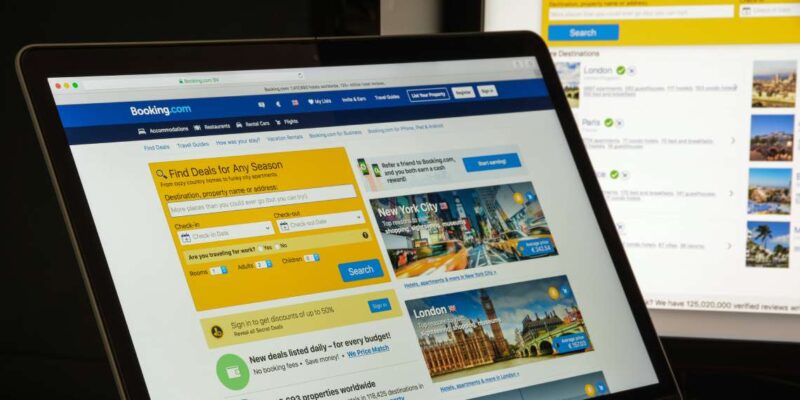
The well-known Dutch booking website Booking.com has been labeled a “gatekeeper” by the European Commission, meaning that the company must now abide by stricter European rules. The Commission wants to stimulate competition in the market and protect users within the EU from possible abuse.
Booking.com is officially a ‘gatekeeper’
A gatekeeper, according to European Commission definitions, is a company that is an important gateway between businesses and consumers.
In practice, these are companies with more than 45 million monthly active users and more than 10,000 annual active business users. In addition, the company must have more than 7.5 billion euros in annual sales. If this is the case, the company becomes subject to the European Digital Markets Act (DMA).
In a press release, the European Commission announced that Booking.com is now subject to the DMA. The globally known travel platform is now part of a list of six other gatekeepers, namely Alphabet (Google, YouTube), Amazon, Apple, ByteDance (TikTok), Meta (Facebook, Instagram, WhatsApp) and Microsoft (Windows, LinkedIn).
This list was compiled in September 2023. These six companies are expected to operate fully in line with DMA rules starting in March 2024.
DMA-proof within six months
Booking.com applied itself for possible qualification for the DMA in March of this year. Now that the EC has agreed, the company will have six months to ensure that it operates in accordance with the relevant obligations of the DMA.
This means Booking.com must offer “more choice and freedom to end users,” as well as “fair access for business users,” according to the press release. Whether this also means changing the options and prices for hotels on the website is unclear.
The EC will monitor the implementation of the DMA rules. If the company does not comply with the obligations, Booking.com risks a fine of up to 10% of its total worldwide turnover. In the case of new violations, this could even go up to 20%.
Booking.com responded to the appointment positively and with high hopes. “We have been working with the European Commission for some time as we anticipated today’s decision. We are reviewing their designation decision now and will continue to work constructively with them as we develop solutions to comply.”
Investigation into X not yet complete
In addition to Booking.com, the social medium X (formerly known as Twitter) is also on the list of possible candidates for the “gatekeeper” position. The Commission indicates in the same press release that it opened a market investigation after X filed a rebuttal against possibly being included in the list of companies subject to the DMA.
X claims that the platform is not an important gateway between businesses and consumers. The investigations of the EC are expected to be completed within five months. The commission did announce that online advertising service X Ads will not be named as a gatekeeper.
ByteDance also appealed the decision to include its advertising platform, TikTok Ads. Again, the Commission decided not to name TikTok Ads as a gatekeeper, although other services of ByteDance are listed.