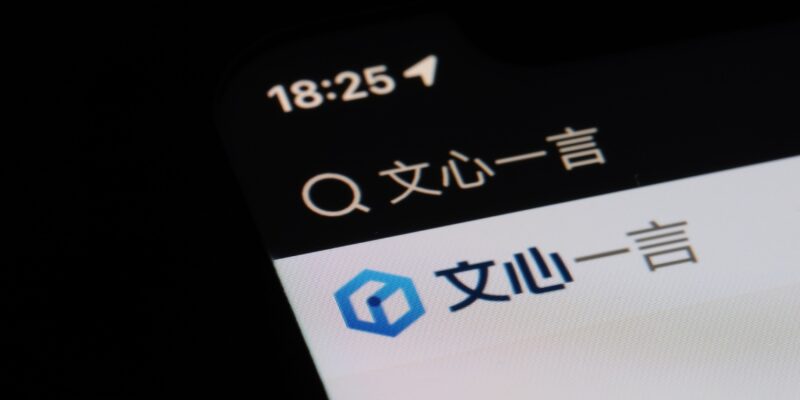

Chinese tech company Baidu has filed a lawsuit in a Beijing court against Apple over fake “Ernie” bot apps on the App Store. The lawsuit, filed on April 7, also indicts the developers of the apps.
Baidu is seeking compensation and the removal of the phony Ernie bot apps. Apple is yet to release an official response to the lawsuit.
In a statement posted on WeChat, Baidu said its recently released AI chatbot “does not have any official app.”
“Until our company’s official announcement, any Ernie app you see from App Store or other stores is fake,” Baidu said.
The phony Ernie apps on Apple’s App Store could pose a significant cybersecurity risk to users who download them. The identities of the developers of these apps are unclear at this time. Reuters said it found at least four fake Ernie bot apps with Chinese names on the App Store.
Baidu’s Ernie Chatbot
Baidu’s Ernie (short for Enhanced Representation through Knowledge Integration) was launched on March 16 — just two days after OpenAI unveiled ChatGPT-4.
Like Google’s Bard, Baidu’s Ernie is a direct competitor to ChatGPT and is similar to OpenAI’s popular chatbot in many ways. The main difference is that it’s designed specifically for the Chinese market.
There was widespread anticipation ahead of the release of Ernie, which was billed as China’s answer to ChatGPT. While it hasn’t lived up to expectations, this is the most advanced AI from a Chinese company, and it’s expected to improve with time.
Ernie is currently available by invitation only. To access the chatbot, users need to apply for access codes. It’s unclear when the service will be freely available to the public.
Counterfeit AI Apps
Cybercriminals are taking advantage of the growing interest in AI tools to snare unsuspecting victims with fake chatbot apps. After the release of ChatGPT in November 2022, several fake ChatGPT apps appeared on Apple’s App Store and Google’s Play Store. Some of these dubious apps registered hundreds of thousands of downloads.
It’s not uncommon for fake apps to slip past Google’s and Apple’s filter and appear in their respective app stores. In one instance, in January 2022, hundreds of cash-stealing apps laced with scamware were found on Google’s Play Store. This led to the theft of hundreds of millions of dollars from victims.
You must be vigilant when downloading any app from the App Store or Play Store to avoid infecting your device with malware. Check if the account that uploaded the app is the developer’s official account. Also, check if the app has a “Version History.”
For added protection, a real-time antivirus solution can scan your device and flag potentially malicious apps before you install them.