- Key differences between ExpressVPN and IPVanish
- IPVanish vs ExpressVPN price comparison
- Which has more global servers: IPVanish vs ExpressVPN
- Which is more secure: ExpressVPN or IPVanish?
- Which VPN has stronger privacy policies: ExpressVPN or IPVanish?
- Which is better for streaming: IPVanish or ExpressVPN?
- Should I choose IPVanish or ExpressVPN for torrenting?
- Should I choose ExpressVPN or IPVanish for gaming?
- Which VPN is easier to use: ExpressVPN or IPVanish?
- IPVanish vs ExpressVPN Reddit comparison
- Final verdict: is IPVanish better than ExpressVPN in 2025?
- FAQ
When people talk about VPNs, ExpressVPN and IPVanish are two long-standing providers that often come up. ExpressVPN is known for its polished apps, consistently reliable speeds, and a strong track record of privacy-first practices. IPVanish, on the other hand, has built a reputation around flexibility, offering unlimited device connections and powerful customization options that appeal to more hands-on users.
To see which one actually delivers the better experience in 2025, I decided to test them both in real-world conditions. Over several weeks, I used ExpressVPN and IPVanish for everything from streaming and browsing to remote work and public Wi‑Fi protection. I compared them on speed, server reliability, security tools, ease of use, and overall value for money. By the end of my hands-on testing, I took away a clear understanding of which VPN has the upper hand. Read on to find out which providers earned the top spot and why.
Here are some quick facts:
| VPN provider | ExpressVPN | IPVanish |
|---|---|---|
| Website | www.expressvpn.com | www.ipvanish.com |
| Rating: | 8.5⭐⭐⭐⭐ | 8.5⭐⭐⭐⭐ |
| Servers | 3000+ servers in 113+ countries | 3400 servers in 113+ countries |
| Speed performance | Fast (Lightway protocol, highly optimized) | Fast (WireGuard, OpenVPN, IKEv2) |
| Simultaneous connections | 8 | Unlimited |
| Encryption | AES-256, ChaCha20, perfect forward secrecy | AES-256, ChaCha20, perfect forward secrecy |
| Streaming support | ✅ Works with Netflix, Hulu, Disney+, BBC iPlayer, Amazon Prime, etc. | ⚠️ Works with Netflix, Hulu, HBO Max, but struggles with BBC iPlayer and some European libraries |
| Torrenting support | ✅ Yes (all servers, strong performance) | ✅ Yes (all servers, strong performance, SOCKS5 proxy) |
| Starting price | $ 2.99/month on a 2-year plan (plus 4 months free) | $ 2.19/month on a 2-year plan (plus 3 months free) |
| Money-back guarantee | ✅ 30 days | ✅ 30 days |
Key differences between ExpressVPN and IPVanish
ExpressVPN and IPVanish are both top VPNs, but cater to slightly different types of users in 2025. ExpressVPN is the stronger choice for speed, reliability, and streaming -it consistently works with Netflix, Disney+, and BBC iPlayer, and its Lightway protocol makes connections fast and seamless. Its no-logs policy has been independently audited several times, and its British Virgin Islands base reinforces its privacy-first reputation. IPVanish, on the other hand, stands out for flexibility and value. It supports unlimited devices on a single subscription and offers advanced tools like split tunneling and a SOCKS5 proxy, which are useful to users who want more control or prefer to use their VPN service for torrenting. Streaming isn’t as reliable and audits aren’t as thorough as ExpressVPN’s, but if customization and maximum device coverage matter most, IPVanish is the better fit.
| ExpressVPN pros and cons | IPVanish pros and cons |
|---|---|
| ✅ Great overall performance, especially for streaming with Lightway protocol | ✅ Unlimited device connections on a single subscription – ideal for families or multi-device users |
| ✅ Extremely simple, consistent apps across any platform | ✅ Focus on configurability with manual settings, protocol choices, and more control |
| ✅ Leading privacy (British Virgin Islands base, frequent third-party audits) | ✅ Includes a built-in SOCKS5 proxy, helpful for torrenting and added flexibility |
| ✅ Every plan comes with the full suite of ExpressVPN features | ✅ Fast speeds with WireGuard protocol and reliable performance for everyday browsing |
| ❌ Costs more than most VPNs, including IPVanish | ❌ Less intuitive than ExpressVPN. Apps offer more settings, but aren’t as polished |
Here are some of the differences wrapped up:
- IPVanish offers more simultaneous connections. One of the first differences I noticed is in how many devices I can use. ExpressVPN caps it at 8 simultaneous connections, while IPVanish lets me connect as many devices as I want under a single account.
- ExpressVPN is faster. In daily use, ExpressVPN’s Lightway protocol stood out for its quick connections and reliable streaming quality. IPVanish supports WireGuard, which gave me snappy speeds in raw tests, though streaming wasn’t as consistent.
- ExpressVPN has more servers, but IPVanish covers slightly more countries. Both gave me plenty of global options. ExpressVPN has around 3000 servers in 113+ countries, while IPVanish offers roughly 3400 servers across 113+ countries. In practice, ExpressVPN gave me a bit more worldwide coverage.
- IPVanish is better for torrenting, while ExpressVPN is better for gaming. ExpressVPN gave me a smoother, lower-latency gaming experience overall. IPVanish handled torrenting better, especially with the included SOCKS5 proxy, but I occasionally ran into higher ping for online games.
- IPVanish is cheaper. ExpressVPN keeps things straightforward with one subscription that includes all features. IPVanish is cheaper and even throws in cloud storage (Livedrive) on certain plans – attractive if you like bundled extras.
- ExpressVPN is more private. ExpressVPN operates from the British Virgin Islands, a privacy-friendly jurisdiction, and backs up its no-logs claim with regular independent audits. IPVanish enforces a no-logs policy as well, but is based in the United States, a less private jurisdiction.
- ExpressVPN is better for. From my testing, ExpressVPN tends to be more dependable at unblocking tricky streaming services like Netflix and BBC iPlayer. IPVanish worked fine for some platforms, but not all, so if streaming is a must-have, I’d lean towards ExpressVPN.
IPVanish vs ExpressVPN price comparison
When it comes to providers’ pricing in 2025, IPVanish comes out as the more budget-friendly option.
- The cost of IPVanish VPN starts at just $ 2.19/month for a 2-year plan, with three extra months free during special offers.
- ExpressVPN offers a 2-year plan at $ 2.99/month with four months free included, which is more than half the price.
Both services give you the choice between monthly and yearly plans, but ExpressVPN sticks to a single, all-inclusive tier with no add-ons or upsells. This makes the VPN simpler, but undeniably more expensive.
IPVanish not only costs less, but it also includes unlimited connections per account, which adds even more value if you’re protecting many devices. Personally, I think ExpressVPN justifies its higher cost with better streaming support and long-standing privacy reputation. However, if keeping expenses low is your top priority, IPVanish is hard to beat.
| Subscription plans | ExpressVPN | IPVanish |
|---|---|---|
| 1-month plan | $12.95 | From $12.99 |
| 1-year plan | $6.67/month ($99.95 total + 3 months free) | From $3.33/month ($39.99 total) |
| 2-year plan | $ 2.99/month ($139.72 total + 4 months free) | $ 2.19/month ($52.68 total + 3 months free during promotions) |
| Free trial | ✅ 3-day free trial on mobile | ✅ 7-day free trial on mobile |
| Money-back guarantee | ✅ 30 days | ✅ 30 days |
| Current deal | 80% off + 4 months free | 85% off + 3 months free |
Both ExpressVPN and IPVanish give you time to test their features across devices and request a refund if the service isn’t a good fit. With IPVanish, you can get a 7-day trial on mobile apps if you sign up through iOS or Android, plus a 30-day money-back guarantee. ExpressVPN offers a shorter 3-day free trial on mobile, along with a 30-day money-back guarantee for first-time users who subscribe directly through its website.
Which has more global servers: IPVanish vs ExpressVPN
When looking at server networks in 2025, the two providers take slightly different approaches. IPVanish lists around 3400 servers in 113+ countries, which provides a solid range of locations, considering both server count and worldwide reach. ExpressVPN, on the other hand, is estimated to run 3000 servers across 113+ countries, though there’s currently no official confirmation on the server numbers from the provider.
In my tests, this meant that IPVanish generally had plenty of servers available without congestion, but ExpressVPN gave me more flexibility when I wanted to connect to less common regions. For example, this was useful during travel or when I tried to stream content from smaller markets.
| Feature | ExpressVPN | IPVanish |
|---|---|---|
| Total servers | 3000+ | 3400 |
| Countries covered | 113+ | 113+ |
| Server types | RAM-only | Mixed (100% RAM-only goal by 2027) |
| Specialty servers | TrustedServer (RAM-only tech) | General-purpose servers |
| Server ownership | Owns most servers | Full server ownership |
Both VPNs use modern protocols to keep performance fast, but ExpressVPN also supports obfuscation by default, which helps bypass stricter censorship and VPN detection. IPVanish is more about customization, giving me more control over advanced settings, but it doesn’t match ExpressVPN’s strategic global spread. From my perspective, IPVanish’s server volume is reliable for everyday use, yet ExpressVPN’s much broader country coverage makes it the winner if worldwide access and streaming reliability are your top priorities.
Which is more secure: ExpressVPN or IPVanish?
Both ExpressVPN and IPVanish cover the essential bases for VPN security in 2025: AES-256 encryption, a kill switch, IP and DNS leak protection, and no‑logs policies. But when I dived deeper into how each provider handles privacy, I noticed both similarities and differences.
- ExpressVPN pairs AES-256 encryption with Perfect Forward Secrecy, which means encryption keys keep rotating to minimize long‑term risk. It supports the trusted OpenVPN and IKEv2 protocols, plus its own Lightway protocol, which I found to be both fast and stable. The VPN also offers split tunneling, which sends select traffic via VPN encryption and allows the rest to use the regular internet connection. Another factor that gave me confidence is that ExpressVPN is located in the British Virgin Islands, outside of major intelligence‑sharing agreements. Most importantly, its no‑logs policy has been independently verified multiple times by respected third parties like PwC and Cure53, which gave me strong reassurance about its privacy claims.
- IPVanish also uses AES-256, along with WireGuard, OpenVPN, and IKEv2, which helped me balance security with speed during testing. On top of useful features like split tunneling, this VPN also has a SOCKS5 proxy for torrent users. However, IPVanish is headquartered in the United States – not an ideal jurisdiction from a privacy perspective. But to counter the concern, IPVanish has undergone independent external checks, confirming the VPN’s strict no-policy claims.
| Security aspect | ExpressVPN | IPVanish |
|---|---|---|
| Jurisdiction | British Virgin Islands (privacy-friendly) | The US (Five Eyes alliance) |
| Encryption | AES-256, ChaCha20 | AES-256, ChaCha20 |
| Protocols supported | Lightway, OpenVPN, IKEv2 | WireGuard, OpenVPN, and IKEv2/IPsec |
| No-logs policy | Independently audited | Independently audited |
| Kill switch | ✅ Yes (all apps) | ✅ Yes (all apps) |
| Leak protection | DNS/IP/WebRTC protection | DNS/IP/WebRTC protection |
Kill switch
Both ExpressVPN and IPVanish come with a built-in kill switch, designed to cut off internet traffic instantly if the VPN drops, so your real IP isn’t exposed. In ExpressVPN’s case, this feature is branded as “Network Lock.” It worked smoothly across both desktop and mobile apps, kicking in automatically without me having to tweak any settings, which was convenient and straightforward.
With IPVanish, the kill switch is available too. It functioned reliably in my tests, but I did notice it lacks the same level of flexibility and universal support that ExpressVPN offers on mobile. If kill switch protection is a must across every device with maximum automation, ExpressVPN delivers just that. IPVanish still gets the job done – just not as seamlessly.

Split tunneling
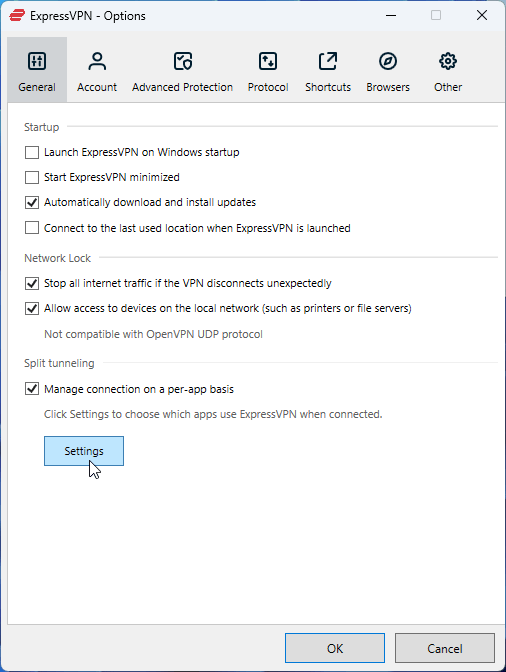
Split tunneling is a handy feature that lets you decide which apps or sites should go through the VPN and which should go through the regular internet connection. I often use it when I want my browser traffic encrypted but still need local apps, like online banking or smart home services, to work without interference.
When I tried it, ExpressVPN handled split tunneling really well. It’s available on Windows, macOS, and Android, and I could easily choose which apps to route through the VPN. I liked how smooth the setup was, and it worked reliably without breaking connections. IPVanish also offers split tunneling, but its availability is more limited. At the moment, it only works on Android, FireOS, and Windows apps for application-based tunneling. On those platforms, it worked fine, letting me exclude certain apps from the VPN, but I missed having it on macOS, where I do most of my work.
Obfuscation
Obfuscation is a feature that makes VPN traffic look like normal internet use, which can be essential for getting around strict firewalls or heavy censorship.
One thing I appreciate about ExpressVPN is that obfuscation is built in automatically. Whenever I connected using OpenVPN or Lightway, the VPN disguised my traffic without me needing to tweak any settings or pick special servers. This made it feel effortless, especially when I was testing connections in more restrictive networks.
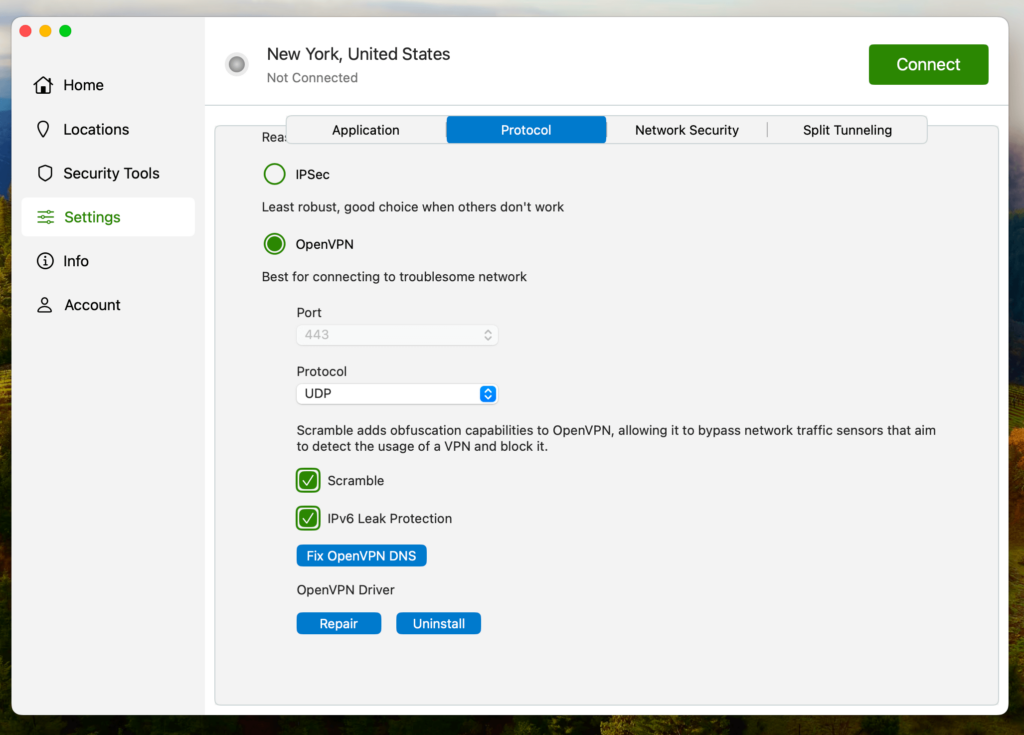
With IPVanish, the situation is different. The VPN doesn’t currently offer obfuscation as a built-in feature. Instead, IPVanish offers the Scramble feature on OpenVPN that provides obfuscation to hide your VPN traffic. This means that if you’re in a highly restricted region and forgot to tweak the options, your connection may be compromised.
In my view, ExpressVPN has a slight advantage here, thanks to its always‑on obfuscation, which makes it much more dependable for places where internet access is tightly controlled.
Specialty servers
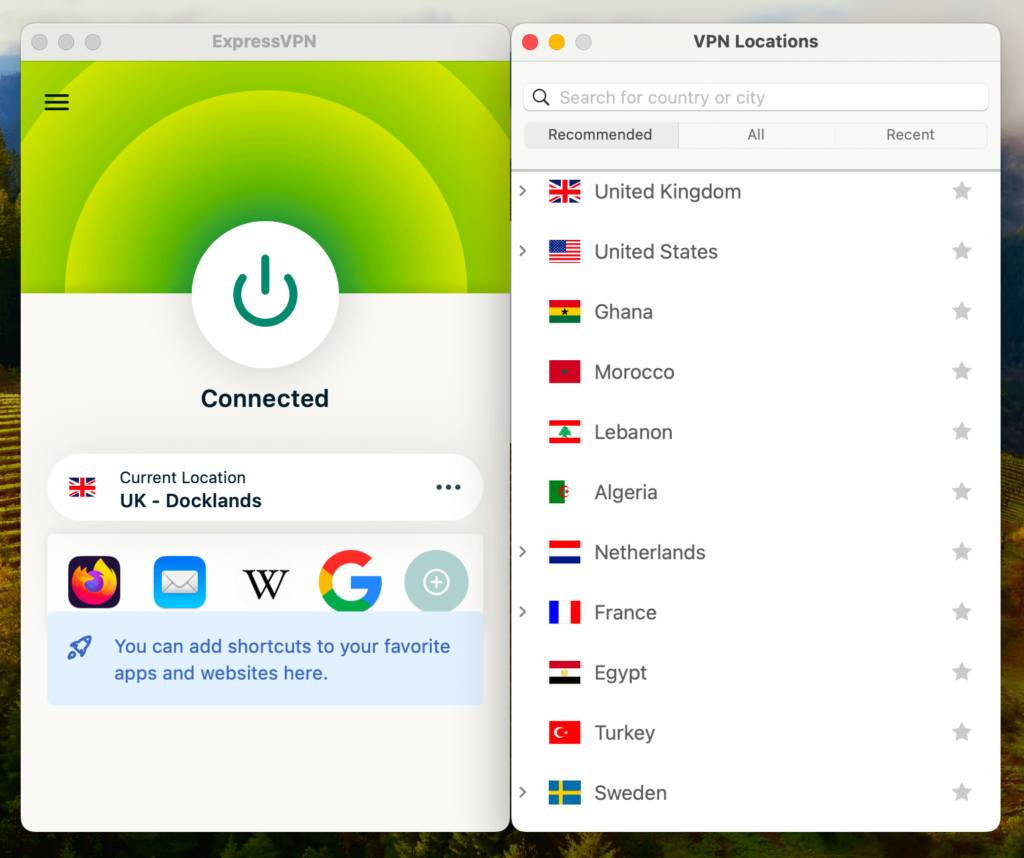
Neither services provide specialty servers in a traditional sense. ExpressVPN keeps things simple, with all of its servers designed to handle every task without requiring you to pick “streaming,” “P2P,” or “gaming” settings. What gives me confidence is that its entire network runs on RAM‑only servers (TrustedServer technology), which wipes data completely on every reboot. Add in features like built-in split tunneling and automatic obfuscation, and it delivers a secure and streamlined setup without much tinkering on my end.
IPVanish also doesn’t build in obfuscation or have niche specialized servers, but it does emphasize customization. I could manually adjust protocols, enable advanced settings like split tunneling (on Android and FireOS), and even use its SOCKS5 proxy for torrenting. While IPVanish doesn’t provide the same range of specialty options that some competitors do, I did find that it appeals to users who prefer to fine‑tune their own configurations rather than rely on pre‑packaged modes.
Ad & malware blocker
With ExpressVPN, I tested its Threat Manager, which blocks connections to trackers and known malicious domains. It worked quietly in the background and noticeably cut down on tracking attempts. However, it doesn’t filter out every single ad the way a full ad‑blocker might. For me, it felt more like a privacy safety net than a heavy-duty ad filter.
IPVanish, on the other hand, includes its VIPRE antivirus software as part of the subscription. To its credit, IPVanish stayed fast and stable, all while featuring a whole antivirus bundle, effectively blocking out ads and malware at all times.
Which VPN has stronger privacy policies: ExpressVPN or IPVanish?
When it comes to privacy, I found ExpressVPN to hold a stronger position. The company is headquartered in the British Virgin Islands, which has no mandatory data-retention requirements and sits outside global surveillance alliances like the Five, Nine, or Fourteen Eyes. That jurisdiction alone gives me more confidence that government agencies can’t easily demand access to user information.
In contrast, IPVanish is based in the United States, a member of the Five Eyes intelligence‑sharing alliance. This naturally raises more red flags for privacy‑first users like me, since the US companies are subject to more aggressive surveillance requests. In the VPN’s defence, IPVanish enforces a no‑logs policy, which has been verified by third parties, confirming the compliance.
No-logs policy
Both providers have a strict no‑logs policy approach, meaning they don’t retain activity data, browsing history, or IP addresses. ExpressVPN has undergone multiple external audits, confirming its zero‑logging policy. It also relies on TrustedServer technology, meaning all servers run on volatile RAM and wipe data automatically upon reboot.
IPVanish also maintains a no‑logs commitment, but has a more complicated history. In 2016, before a change in ownership, the company was involved in a case where user data was reportedly shared with authorities. Since then, IPVanish has pledged stronger privacy practices under new management, submitting to fresh independent audits to back up the stance.

Independent audits & transparency reports
What set ExpressVPN apart is its long track record of transparency. The VPN publishes detailed audit results, maintains a dedicated Trust Center, and clearly documents its privacy policies and infrastructure practices. Having this level of openness makes it much easier to trust its claims.
IPVanish, while clear in its written policies, still hasn’t matched ExpressVPN’s level of ongoing verifications and transparency reports. In practice, it works as expected for daily browsing and streaming, but as someone who prioritizes independent jurisdiction and privacy guarantees, I see ExpressVPN as the safer bet overall.
Which is better for streaming: IPVanish or ExpressVPN?
From my real‑world use, I found that ExpressVPN outperforms IPVanish when it comes to streaming. ExpressVPN stood out as a more consistent streaming VPN, with its in-house Lightway protocol delivering smooth 4K playback with minimal buffering. I rarely had issues unblocking major platforms like Netflix, BBC iPlayer, Hulu, Disney+, HBO Max, and Amazon Prime Video. It felt dependable no matter which region I connected to.
On the other hand, while IPVanish also supports streaming, and its WireGuard protocol delivered fast speeds when I put it through tests I noticed that access wasn’t always a guarantee. While some services unlocked easily, others, like BBC iPlayer or certain Netflix libraries, required more trial and error.
| Streaming service | ExpressVPN | IPVanish |
|---|---|---|
| Netflix | ✅ Yes (multiple regional libraries) | ✅ Yes (US library and a few more) |
| BBC iPlayer | ✅ Yes | ⚠️ Inconsistent |
| ITVX | ✅ Yes | ✅ Yes |
| Disney+ | ✅ Yes | ✅ Yes |
| Amazon Prime Video | ✅ Yes | ⚠️ Inconsistent |
| Hulu | ✅ Yes | ⚠️ Inconsistent |
| HBO Max | ✅ Yes | ✅ Yes |
Overall, while both providers are capable of handling streaming, ExpressVPN is the stronger choice for straightforward unblocking and smooth playback. IPVanish is still effective and has the speed, but I’d personally trust ExpressVPN more, as I don’t want to spend time trying numerous servers to find one that works.

Should I choose IPVanish or ExpressVPN for torrenting?
When it came to torrenting, I found that both VPNs provide a secure and private environment, with strong encryption, leak protection, and kill switch support to keep activity hidden if the connection drops. Both also allow P2P traffic across their full server networks, so I didn’t have to hunt for specific “torrent servers” like with some other providers.
In my hands-on experience, though, IPVanish had the edge in raw download speeds. Thanks to its implementation of WireGuard together with a SOCKS5 proxy, downloads finished quicker, and large files felt smoother with fewer interruptions. In this way, IPVanish tailors to advanced users who want more control over their torrent setup.
ExpressVPN was slightly slower for large file transfers but still very consistent. Every server supports torrenting, and its Network Lock (kill switch) gave me peace of mind that my real IP would never leak mid‑download. Even though it doesn’t offer port forwarding, it felt stable and reliable for keeping my torrenting activity private.
Should I choose ExpressVPN or IPVanish for gaming?
For gaming, both ExpressVPN and IPVanish proved to be dependable options, offering strong security and stable connections to protect me from DDoS attacks and sudden disconnects. According to my testing, IPVanish’s WireGuard protocol delivered lower ping and faster speeds on nearby servers, which made competitive matches feel a bit more responsive. It also allows unlimited simultaneous device connections, which is useful if someone is gaming on multiple platforms in the same household.
ExpressVPN, meanwhile, impressed me with its consistency. Its Lightway protocol kept latency steady even over long distances. I also liked that it’s straightforward to set up on many devices, including routers, which let me cover my PlayStation and Xbox without much hassle. While its speeds weren’t always the absolute fastest, the connections felt reliably smooth, which mattered more during longer gaming sessions.

Which VPN is easier to use: ExpressVPN or IPVanish?
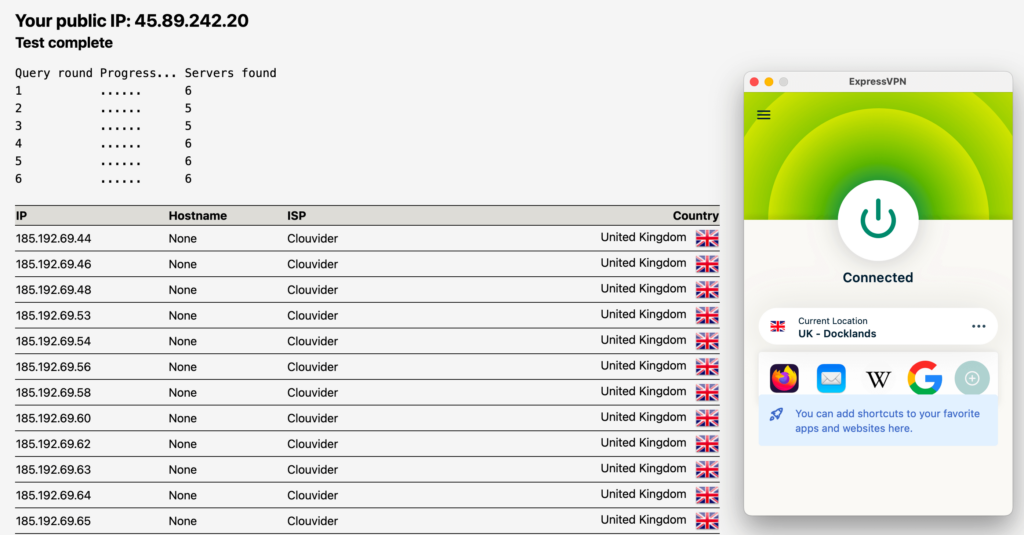
In my experience, both ExpressVPN and IPVanish make setup easy and painless, with dedicated apps for Windows, macOS, iOS, Android, and more. Getting started with ExpressVPN took me just a few clicks. Once I logged in, hit connect, I was protected. Its interface focuses on simplicity, with a large one‑tap connect button and an uncluttered server list that makes switching locations effortless.
IPVanish, on the other hand, feels a bit more customizable. Its app shows real‑time connection stats and offers more settings up front, which could appeal to advanced users, but I found it slightly less streamlined compared to ExpressVPN’s cleaner design. That said, IPVanish also supports unlimited devices and works across all the core platforms, along with Fire TV and some routers.
IPVanish vs ExpressVPN Reddit comparison
Browsing through Reddit discussions in 2025, I noticed that ExpressVPN has good feedback overall. Many Redditors highlight its trustworthy privacy practices, proven no‑logs audits, and strong streaming support. Users often mention how reliable it is for unblocking Netflix, BBC iPlayer, and other global platforms. I also saw consistent praise for ExpressVPN’s ease of use across multiple devices, with some saying it’s their go‑to VPN when traveling since it just works with no headache. On the flip side, there are posts raising concerns about its higher subscription cost compared to other VPNs, and some long‑time users suggest that its speeds have leveled off rather than improved.
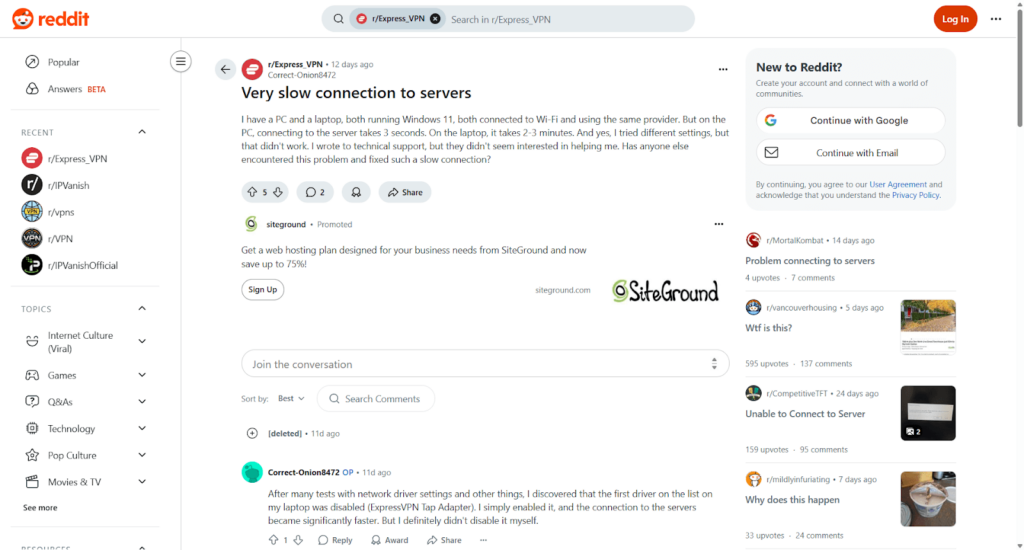
IPVanish, meanwhile, gets a different kind of feedback. Reddit users frequently point out its lower price and unlimited device connections as major selling points, especially for households where everyone wants VPN coverage. Its impressive WireGuard speeds are also mentioned, with gamers and torrent users noting consistently fast performance. That said, I did notice several comments mentioning IPVanish’s track record, specifically its data-handling practices in the past and its US jurisdiction, which some privacy‑focused users feel is a weak spot.

Final verdict: is IPVanish better than ExpressVPN in 2025?
After testing both VPNs for September 2025, I’d say ExpressVPN and IPVanish each bring their own strengths to the table. Both use AES‑256 encryption, reliable kill switches, and leak protection, so I never worried about day‑to‑day security. IPVanish impressed me with its fast WireGuard performance, unlimited device connections, and competitive pricing, making it a solid pick for families or anyone who needs fundamental VPN coverage on lots of gadgets at once.
That said, ExpressVPN still feels like the more trustworthy long‑term choice. The VPN’s British Virgin Islands jurisdiction, combined with independent no‑logs audits and TrustedServer (RAM‑only) tech, gives me stronger peace of mind in terms of privacy. On top of that, its proven consistency for streaming, smooth performance with its Lightway protocol, and wide device support (including routers and consoles), make it the VPN I’d rely on for long-term stability, even if it comes at a higher price tag.
| When to choose ExpressVPN | When to choose IPVanish |
|---|---|
| ✅ When reliable streaming access across multiple regions is your top priority | ✅ When you want fast speeds with the WireGuard protocol |
| ✅ When you want a proven provider with a long track record and strong reputation | ✅ When you need unlimited simultaneous device connections under one account |
| ✅ When privacy jurisdiction (Virgin Islands) backed by external audits is your priority | ✅ When you’re looking for a budget‑friendly VPN that still delivers strong encryption and essential security tools |
| ✅ When you prefer a simple, polished interface with minimal setup | ✅ When you prefer extra configuration options like split tunneling on Android/FireOS, or a SOCKS5 proxy for P2P |
| ❌ When a budget-friendly VPN service is your main consideration | ❌ When you prefer a VPN with an offshore, privacy‑friendly jurisdiction |
Key takeaways:
- IPVanish is faster with WireGuard, supports unlimited devices, and is cheaper.
- ExpressVPN has privacy‑friendly jurisdiction, independent audits, and RAM-only TrustedServer tech.
- Both support P2P, strong security features, and popular streaming platforms.
You may also want to read:
- NordVPN vs Surfshark
- NordVPN vs Proton VPN
- NordVPN vs Surfshark vs ExpressVPN
- ExpressVPN vs NordVPN
- ExpressVPN vs Surfshark
- NordVPN vs CyberGhost
- CyberGhost vs Surfshark
- ExpressVPN vs Surfshark VPN comparison
- Differences between ExpressVPN and PIA
FAQ
ExpressVPN is based in the privacy‑friendly British Virgin Islands, uses RAM‑only TrustedServer tech, and has a simplified, user-friendly app interface. IPVanish is US‑based with fewer transparency checks, but it’s cheaper, allows unlimited device connections, and includes more customization options.
IPVanish is better for affordability, unlimited devices, and WireGuard speeds, making it ideal for large households. But if you value audited and jurisdiction-backed privacy, consistent streaming, and global reliability, ExpressVPN has the edge.
IPVanish can be faster on local servers with WireGuard, especially for downloading and torrenting. ExpressVPN’s Lightway protocol is more stable over long distances, offering smoother performance for global streaming.
ExpressVPN is more consistent, reliably unblocking major sports platforms like NFL games on ESPN or unlocking NBA League Pass, bypassing regional restrictions. IPVanish can work, but often requires more trial and error with server switching.