- Our recommended VPNs for geo-blocking
- What is geo-blocking?
- How to remove geo-blocking with a VPN
- Best VPNs for region-locked content
- What is the best free VPN for geo-blocking in 2026?
- How to get around geo-blocking with a VPN: detailed steps
- Examples of geo-restricted content and how to bypass it
- Is using a VPN to bypass geo-restrictions legal?
- How to bypass geo-blocking without a VPN
- Final thoughts
- FAQ
After testing numerous VPNs in 2026, I found that NordVPN stood out as the best VPN for geo-blocking thanks to its fast speeds, extensive server network, and ability to reliably unblock content from multiple regions. Surfshark is another strong option when it comes to accessing region-locked content, offering an excellent balance of affordability and a wide network of servers for streaming and browsing across the globe.
Geo-blocking itself is the practice of restricting access to certain websites, games, or streaming platforms based on your location, which means that if you travel abroad, you might suddenly lose access to your favorite shows or services due to licensing rules. The easiest way to get around geo-blocking is by using a reliable VPN, which masks your IP address and lets you appear as if browsing from another country. Keep reading to explore the best VPNs for removing geo-blocks in 2026.

Our recommended VPNs for geo-blocking
| VPN for geo-blocking | Rating | Best for | Servers | Streaming sites unblocked | Other geo-blocked sites | Speed | Price | Free trial |
|---|---|---|---|---|---|---|---|---|
| 1. NordVPN | ⭐⭐⭐⭐⭐ 9.3 | Overall best VPN for bypassing geo-blocks | 8900 in 149+ countries | Netflix (global libraries), Amazon Prime Video, BBC iPlayer, Hulu, Disney+, ESPN+, DAZN, Bet365, etc. | Wide global range | High | Starting $ 3.49/month | ✅ 3-day free trial on Android |
| 2. Surfshark | ⭐⭐⭐⭐⭐ 9.0 | Best affordable VPN for blocked content | 4500 in 100+ countries | Netflix (US/UK/Canada), Amazon Prime Video, BBC iPlayer, Hulu, Disney+, Fubo, etc. | Wide global range | High | Starting $ 2.49/month | ✅ 7-day free trial |
| 3. Proton VPN | ⭐⭐⭐⭐ 8.9 | Best VPN for private geo-blocks bypassing | 20700 in 149+ countries | Netflix, Amazon Prime Video, Disney+, and BBC iPlayer. | Moderate range | Medium-High | Starting $ 2.99/month | ✅ Free version available |
| 4. IPVanish | ⭐⭐⭐⭐ 8.5 | Best reliable VPN for region-locked content | 3400 in 113+ countries | Hulu, Netflix, Amazon Prime Video, BBC iPlayer. | Moderate range | Medium-High | Starting $ 2.19/month | ✅ 7-day free trial on mobile |
| 5. ExpressVPN | ⭐⭐⭐⭐ 8.5 | Best VPN for streaming geo-restricted content | 3000 in 113+ countries | Netflix, Disney+, Amazon Prime Video, Hulu, BBC iPlayer, HBO Max, etc. | Wide global range | High | Starting $ 2.99/month | ✅ 3-day free trial on mobile |
What is geo-blocking?
Geo-blocking, also known as geo-restrictions, is the digital practice of restricting access to online content or services based on your geographical location. In other words, where you are located physically can determine what you’re allowed to watch, read, or use online. I’ve run into this myself when traveling and suddenly finding that shows I could stream at home were unavailable abroad.

Geo-blocking works by identifying your location using different methods:
- It checks your IP address and compares it to a whitelist or blacklist.
- On mobile devices, it may use GPS coordinates, latitude, and longitude.
- Some services even measure network latency or routing paths to estimate your location.
Companies use geo-restrictions for the following key reasons:
- To comply with local laws and government regulations.
- To enforce licensing agreements for movies, shows, games, or music.
- To adjust prices depending on your region.
- To protect against fraud or unauthorized access.
You’ve probably come across it without realizing. Maybe you tried to stream a show only to see “This content is not available in your country” pop-up. Or you noticed your streaming service has a different library when you log in from abroad.
VPNs like NordVPN, Surfshark, Proton VPN, IPVanish, or ExpressVPN can help bypass geo-blocking by masking your IP address and making it look like you’re browsing from another country.
Note:
It’s important to know that even where VPN use is legal, streaming services and gaming platforms still often set up geo-restrictions. Bypassing these geo-blocks can violate their terms of service and may lead to account termination. And of course, using a VPN for illegal activity remains illegal.
How to remove geo-blocking with a VPN
- Choose a reliable VPN provider that offers wide server coverage. I recommend NordVPN, now 78% off.
- Download and install the VPN app on your device.
- Connect to a server in the country where your desired content is available (for example, a UK server for BBC iPlayer or a US server for Hulu).
- Log in to your chosen streaming service and start enjoying content that was previously unavailable in your region.
Best VPNs for region-locked content
A VPN is a highly effective way to bypass geo-blocks by masking your real IP address. This makes it appear as if you’re browsing from the right region, letting you watch geo-restricted shows unavailable in your actual location. However, many platforms now use advanced VPN detection systems that weaker VPN services can’t bypass. Therefore, the best VPNs stand out by offering fast speeds, reliable servers, strong encryption, and proven success at unblocking major streaming sites.
When choosing the top VPNs for bypassing geo-restrictions, I identified several key criteria and the importance of each (signified as a percentage).
- Server coverage (30%) is crucial because wider server availability lets users access content from different regions, especially the USA, UK, Canada, Australia, and Germany. These countries are famous for hosting streaming platforms like Netflix US, BBC iPlayer, Disney+, and Hulu, as well as regional sports broadcasts. Multiple servers around these regions offer more flexibility and minimize the risk of server overload or blackouts.
- Strong unblocking reputation (30%) was another main criterion. I tested each VPN against a range of streaming services, from Netflix and Amazon Prime Video to BBC iPlayer and Hulu, plus platforms for sports, online gambling, and international news. Only VPNs that consistently bypassed detection and unblocked the widest variety of content made the list.
- Speed (20%) was a key metric too. I ran speed tests on major region servers like those in the US, UK, and Europe, ensuring each VPN could support streaming in HD or 4K without buffering or lag. Fast connections are essential for a smooth experience, and only the VPNs with consistently high speeds passed my tests.
- Privacy and security features (20%) brought the final weight in my evaluations. I reviewed the encryption protocols, no-logs policies, DNS and IP leak protection, kill switches, and extras like double encryption with each provider. I conducted leak tests during streaming sessions to make sure users’ real locations would not be accidentally exposed, ensuring both privacy and continued access to region-locked content.

Top 1. NordVPN – overall best VPN for geo-blocking
- Rating: 9.3 ⭐⭐⭐⭐⭐
- Servers: 8900 servers in 149+ countries
- Unblocked sites: Netflix, Hulu, Amazon Prime Video, Disney+, HBO Max, BBC iPlayer, Peacock, ESPN+, DAZN, and others.
NordVPN stands out as the best VPN for bypassing geo-blocking restrictions due to its combination of fast speeds, robust security, and extensive server network. During in-house tests, I found it effortless to unlock a wide range of platforms and enjoy content without interruptions.
Unblocking capabilities. NordVPN offers over 8900 servers in 149+ countries, including key regions like the USA, UK, Canada, Australia, and Germany – ideal for streaming popular shows or accessing regional sports and gambling sites. I tested NordVPN with major geo-restricted sites such as Netflix (global libraries), Amazon Prime Video, BBC iPlayer, Hulu, Disney+, ESPN+, DAZN, and even Bet365, where it unblocked all without fail. NordVPN’s reliable access across diverse international platforms is very impressive.
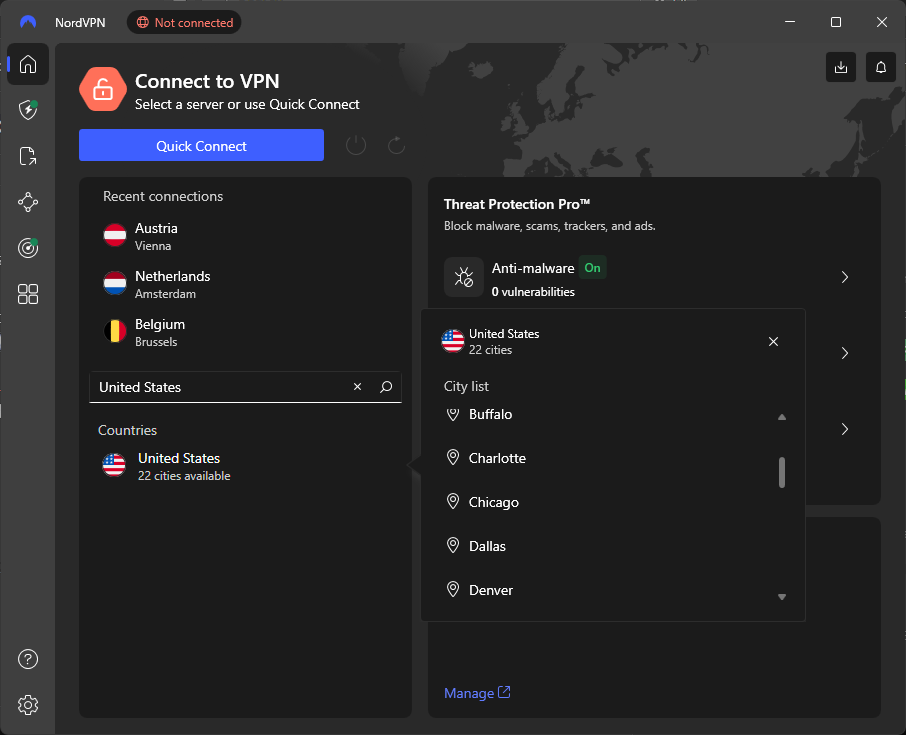
Performance. When it comes to performance, NordVPN surprised me with some of the fastest speeds I saw, thanks to its NordLynx protocol. I found streaming in HD and 4K smooth, with minimal buffering or lag, outperforming most other VPNs I tested. Speed is crucial for a good streaming experience, and NordVPN hits that mark perfectly.
Security features. For security, NordVPN includes AES-256 encryption, an automatic kill switch, and strict no-logs policies that protect privacy and prevent IP or DNS leaks. I ran multiple leak tests during sessions and never had my real location exposed. Obfuscated Servers also help bypass the tightest geo-blocks.
Price. NordVPN pricing starts at $ 3.49/month for long-term plans, allowing up to 10 simultaneous connections. While not the cheapest geo-blocking VPN available, NordVPN offers excellent value considering its extensive features and reliability. It offers a 3-day free trial on Android and includes a 30-day money-back guarantee with any subscription. I have full confidence recommending it as the top VPN for geo-blocking in 2026.
Why I recommend NordVPN:
- Obfuscated Servers
- Top-notch security package
- Strong and proven privacy record
NordVPN weaknesses:
- Free trial is only 3 days
Top 2. Surfshark – cheapest VPN to get around blocked websites
- Rating: 9.0 ⭐⭐⭐⭐⭐
- Servers: 4500 servers in 100+ countries
- Unblocked sites: Netflix (US/UK/Canada), Amazon Prime Video, BBC iPlayer, Hulu, Disney+, and others.
Surfshark is the best choice for bypassing geo-blocking if budget is a priority. The VPN offers excellent unblocking capabilities and strong performance at one of the lowest prices in the VPN market, especially considering its security package. During in-house tests, I had no issues accessing geo-restricted content from many popular sites while enjoying stable connection speeds.
Unblocking capabilities. Surfshark provides over 4500 servers in 100+ countries, including vital streaming hubs like the USA (600+ servers across 24 cities), the UK, Canada, Australia, Germany, and beyond. Surfshark’s server variety ensures you can easily bypass restrictions on streaming platforms or gambling sites worldwide. I tested Surfshark on geo-blocked sites such as Netflix (US/UK/Canada), Amazon Prime Video, BBC iPlayer, Hulu, Disney+, and it unblocked all without effort. While not as extensive as NordVPN’s network, its location coverage is solid and is more than enough for most users.
Performance. Regarding performance, Surfshark delivered consistently high speeds during my testing, making streaming HD and 4K content smooth and buffer-free. Its speeds are competitive with other premium VPNs, and sometimes even faster, thanks to optimized server load management and a reliable protocol.
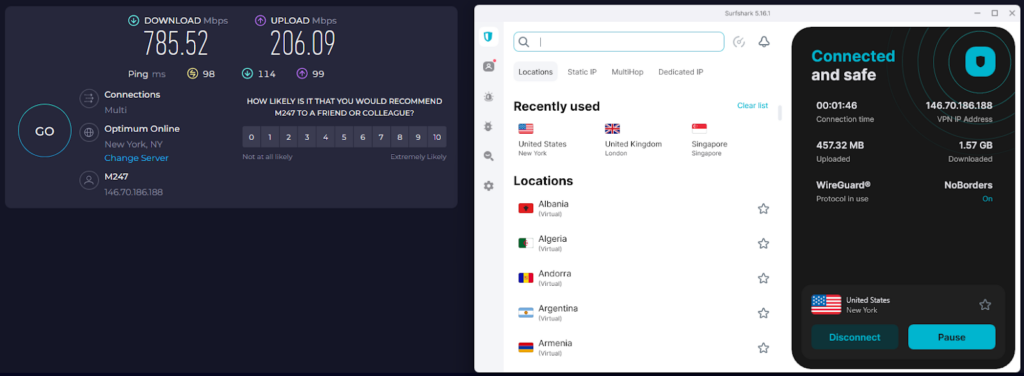
Security features. For security, Surfshark includes AES-256 encryption, a kill switch, DNS and IP leak protection, and offers specialized servers like Multi-Hop for double VPN connections. I never experienced leaks during sessions, and its strong no-logs policy reassured me about privacy concerns.
Price. Pricing is Surfshark’s biggest advantage – it starts as low as $ 3.49/month with unlimited simultaneous connections and a 7-day free trial on up to 3 devices, plus a 30-day money-back guarantee on every plan. This makes Surfshark one of the most affordable VPNs for bypassing geo-blocking reliably and without compromising quality.
Why I recommend Surfshark:
- Unlimited device connections
- Competitive price tag
- Premium security features
NordVPN weaknesses:
- Some features cost extra

Top 3. Proton VPN – freemium VPN to unblock geo-restricted websites
- Rating: 8.9 ⭐⭐⭐⭐
- Servers: 20700 servers in 149+ countries
- Unblocked sites: Netflix, Amazon Prime Video, Disney+, and BBC iPlayer, and others.
Proton VPN is a solid choice for bypassing geo-blocking restrictions, especially for users seeking a freemium option that still delivers strict privacy. During my in-house tests, I found ProtonVPN’s vast server network and unblocking capabilities to be strong, making it a good option to access geo-restricted sites.
Unblocking capabilities. Proton VPN offers over 20700 servers in 149+ countries, including major streaming hubs like the USA, UK, Canada, Germany, and Japan. This extensive coverage gives users flexibility when accessing streaming services, gambling sites, and regional content. I tested Proton VPN with platforms such as Netflix, Amazon Prime Video, Disney+, and BBC iPlayer, experiencing mostly smooth unblocking. However, ProtonVPN sometimes struggles with Hulu and certain localized sports sites, showing inconsistent access compared to top competitors.
Performance. In terms of performance, Proton VPN delivers stable speeds that support HD streaming well, though 4K streaming occasionally buffers depending on server choice. While not the fastest VPN I tested, its speeds are more than adequate for most users focused on privacy alongside streaming. Important to note, Proton VPN’s free version doesn’t hold up as well as its premium Plus plan, so if you’re after a quality streaming experience, I recommend upgrading instead of struggling with free congested servers limited to just six countries.

Security features. Security is a strong point for Proton VPN. It features AES-256 encryption, a strict no-logs policy, DNS and IP leak protection, and Secure Core servers that route traffic through privacy-friendly countries to enhance security. During testing, I had no leaks or privacy concerns.
Price. Proton VPN’s pricing starts free for basic use with limited servers, while paid plans start at $ 2.99/month and allow up to 10 simultaneous connections. The free tier, along with solid security and a growing server network, makes it an excellent freemium VPN to unblock geo-restricted websites, which is upgradeable to a premium plan at a click.
Why I recommend Proton VPN:
- Decent free version
- Massive server network
- Strong privacy stance
Proton VPN weaknesses:
- More expensive

Top 4. IPVanish – secure VPN for geo spoofing
- Rating: 8.5 ⭐⭐⭐⭐
- Servers: 3400 servers in 113+ countries
- Unblocked sites: Netflix, Amazon Prime Video, BBC iPlayer, ESPN+, and others.
IPVanish is a solid choice for bypassing geo-blocking restrictions, especially if security and unlimited device connections matter most. During in-house tests, I found IPVanish reliable for geo spoofing and streaming, though it showed some inconsistencies on certain platforms compared to the top contenders.
Unblocking capabilities. IPVanish operates over 3400 servers in 113+ countries, including major streaming and gambling hubs like the USA, UK, Canada, Australia, and Germany. This diverse server network provides flexibility when accessing geo-restricted content globally. I tested IPVanish with Netflix US and UK, Amazon Prime Video, BBC iPlayer, and ESPN+, successfully unblocking most platforms. However, I noticed occasional issues with consistently streaming Hulu in Mexico and some localized sports sites, where access was spotty compared to NordVPN or Surfshark.
Performance. Performance-wise, IPVanish impressed with decent speeds across tested servers, particularly in North America and Europe. Streaming HD content was smooth with minimal buffering, though 4K streams occasionally faced interruptions, ranking just below NordVPN in speed tests.
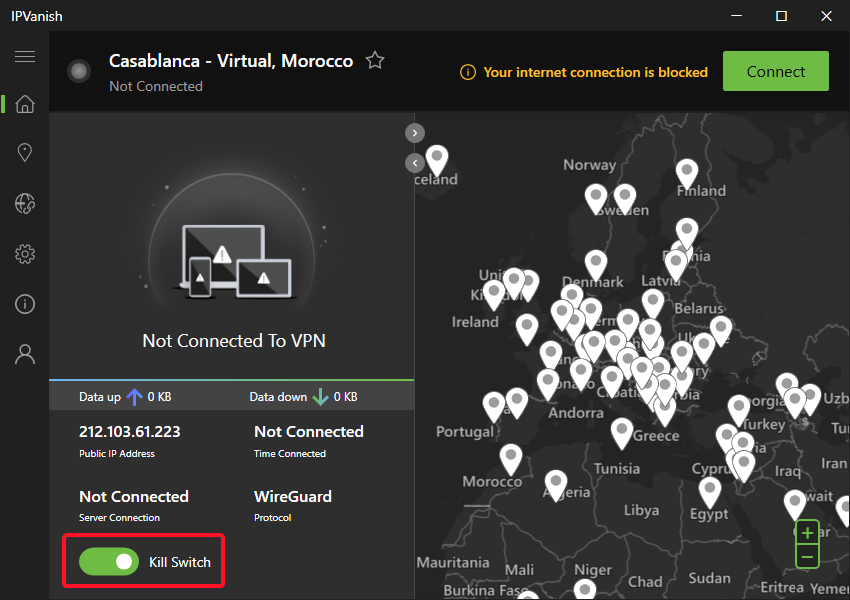
Security features. In terms of security, IPVanish uses AES-256 encryption and supports WireGuard and OpenVPN protocols. It features a kill switch, DNS/IP leak protection, and a strict no-logs policy verified in independent audits. The unlimited simultaneous connections is a special perk that stood out to me, accommodating multiple devices effortlessly.
Price. Pricing starts at $ 2.19/month, making IPVanish affordable, considering the VPN has no device limit. It offers apps for major platforms and a 7-day free trial on mobile, alongside the 30-day money-back guarantee. Overall, IPVanish is a secure, budget-friendly VPN suitable for geo spoofing, with minor streaming consistency trade-offs.
Why I recommend IPVanish:
- Effective P2P optimization for torrenting
- Free antivirus included
- Owns all its servers
IPVanish weaknesses:
- Unblocks fewer geo-restricted sites

Top 5. ExpressVPN – fast VPN to bypass geo restrictions for streaming
- Rating: 8.5 ⭐⭐⭐⭐
- Servers: 3000 servers in 113+ countries
- Unblocked sites: Netflix, Disney+, Amazon Prime Video, Hulu, BBC iPlayer, HBO Max, and others.
ExpressVPN stands out as the premier choice for bypassing geo-blocking restrictions, making it incredibly easy to access geo-restricted content from anywhere in the world. During my testing, ExpressVPN’s consistent unblocking performance and rapid speeds made it a favorite for streaming movies, live sports, and accessing websites typically unavailable in certain regions.
Unblocking capabilities. ExpressVPN has over 3000 servers in 113+ countries, including key streaming and gambling markets such as the US, UK, Canada, and Japan – a strategic advantage that greatly expands access to more niche region-locked content. When I tested ExpressVPN with top platforms, it reliably unblocked US and UK Netflix, Disney+, Amazon Prime Video, Hulu, BBC iPlayer, HBO Max, and beyond, delivering smooth playback on all accounts. The VPN’s reach covered not only mainstream streamers but also regional channels and international gambling websites. Each of my tests confirmed ExpressVPN’s effectiveness at bypassing typical barriers. There were rare instances on certain niche sports services or with some local platforms where access was less consistent, usually resolved by switching servers or clearing browser cookies.
Performance. Speed is critical for streaming, and ExpressVPN delivered good results. In my own tests, speed drops typically ranged from 15 to 25% – fast enough for both HD and 4K streaming, even on distant servers. Buffering was rarely an issue, and compared to top VPNs, ExpressVPN consistently demonstrated download speeds and reliability that were almost as good as NordVPN and Surfshark. Nearby servers proved faster, offering the best performance for high-bandwidth activities.
Security features. ExpressVPN impressed me with its TrustedServer technology (RAM-only servers) and robust AES-256 encryption, both of which ensure that no data is stored and traffic remains private. Features like private DNS on every server and a strict no-logs policy build extra confidence that privacy protection won’t be compromised while unblocking content. Compared to competitors, the seamless balance of security and usability sets ExpressVPN apart, though it lacks certain advanced customizations some power users might seek.

Price. ExpressVPN’s plans begin at $ 2.99/month and the VPN supports up to 14 simultaneous connections. While not the cheapest VPN for geo-blocking, the reliability and performance justify the premium. It also offers a 3-day free trial on mobile, while first-time users who subscribe directly can benefit from a 30-day money-back guarantee. Budget-minded users may find other VPNs for lower costs, but they rarely match ExpressVPN’s track record for unblocking and speed.
Why I recommend ExpressVPN:
- Extensive unblocking reach
- Robust speeds
- RAM-only servers
ExpressVPN weaknesses:
- Free trial is limited to 3 days on mobile

What is the best free VPN for geo-blocking in 2026?
After trying out multiple free VPNs myself, I quickly realized that relying on them for geo-blocking can be frustrating. Most of the free options I tried had very limited server locations – sometimes just two or three countries. This made it impossible to access the broader global content I wanted. On top of that, the servers were slow and congested, so even when I did manage to connect, streaming was often interrupted by buffering. The biggest letdown was the data caps: some free VPNs only gave me 500 MB per month, which isn’t even enough for a single movie in standard definition. Even worse, Netflix and other streaming platforms easily detected the IP addresses of free servers, blocking access right away. In some cases, I noticed questionable data-handling practices, like logging user activity or selling data, which is against the very purpose of using a VPN.
That said, if you only need a VPN occasionally for more casual use, Proton VPN is by far the best free option I’ve come across. The VPN’s free tier offers unlimited data and solid privacy protection, but streaming access is inconsistent, and you’re limited to servers in just six countries: the Netherlands, Japan, Romania, Poland, the United States, and Singapore. For reliable everyday geo-blocking, I recommend premium providers like NordVPN, Surfshark, or Proton VPN paid plan. You will get fast global networks, consistent streaming access, and risk-free 30-day money-back guarantees, which make them worth trying instead of struggling with mostly ineffective free VPNs.
How to get around geo-blocking with a VPN: detailed steps
When it comes to bypassing geo-blocking, the exact steps you’ll need to follow may vary depending on the site or service you want to access. However, the main process to get around geo blocking is very similar each time: select a reliable VPN; install its app; and connect to a server in a country where the content is available. Sometimes, you may also need to clear your browser’s cache and cookies, use private browsing, or try GPS spoofing tools.
Step 1. Get a trustworthy VPN
The most important factor is choosing a VPN that is reliable at bypassing geo-blocks. Look for one with many servers worldwide, strong privacy protections, and fast speeds. Based on my tests, NordVPN stands out as the best VPN for geo-blocking because it consistently unblocks popular streaming sites, offers robust security with AES-256 encryption, and delivers reliable performance across all devices.
Step 2. Download and install VPN on your device
Most VPN services today offer user-friendly apps for Windows, Mac, iOS, Android, and even smart TVs and routers, so installation is usually straightforward. To ensure safety, always download the VPN directly from the provider’s website or a trusted app store. For platforms like Pokémon GO or regional streaming apps that use device GPS location, you may need to use a GPS spoofing app in addition to the VPN – this will trick location-based services that check both IP and GPS data.
Step 3. Connect to a server in the country where the content is available
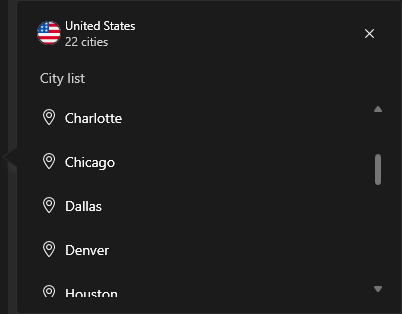
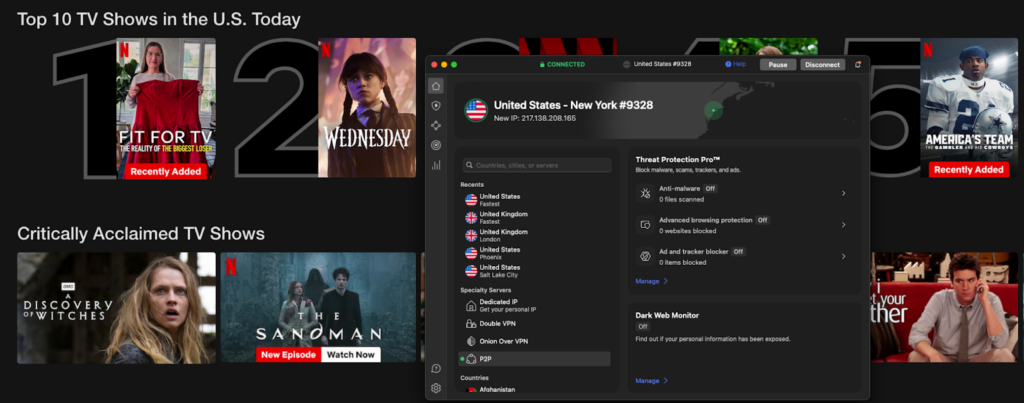
Geo-restricted content is blocked based on your IP address location. By connecting to a VPN server in the right region, sites will see your connection as coming from that country. For instance, to watch US Netflix, connect to a server in the United States; for BBC iPlayer, pick a UK server.
Step 4. Access the geo-restricted content
Once your VPN connection is established, you can visit the website or launch the app and enjoy the previously restricted material just as a local would. If you’re still blocked after connecting, try clearing your browser’s cache and cookies, switching to incognito or private mode, or connecting to a different VPN server. If problems persist, contact your VPN’s customer support – some providers have dedicated servers optimized for unblocking specific sites.
Examples of geo-restricted content and how to bypass it
Geo-blocking doesn’t just impact streaming libraries – it also restricts live sports, gaming platforms, news sites, and even online services like banking. I’ve often run into these obstacles while traveling. Again, the most common and reliable way to bypass them is by using a VPN, which hides your true location.
❗Region-locked content on streaming services
Region-locked content refers to movies, TV shows, or even entire platforms that can only be accessed in certain countries, and I’ve personally bumped into this many times. Sometimes, a show I’m watching at home suddenly disappears from my library when I travel abroad. This happens because streaming companies sign licensing deals that limit where their content can legally be shown. It’s not that the platform doesn’t want you to watch its content – it’s simply restricted by contracts and regional regulations.
Netflix is one of the most obvious examples, as its catalog differs significantly from country to country. Meanwhile, Hulu is only available within the United States, which means it’s completely inaccessible outside the US. BBC iPlayer is locked to the UK, while Disney+ tailors its library to different targeted regions, meaning you may miss certain movies or shows unless you’re in the right country.
A practical way to go around region-locked content is to connect to a VPN server in the country where the content is available. This makes it appear as if you’re browsing from there, so you can watch shows or movies freely without triggering geo-blocks. Still, some services use sophisticated VPN detection, so success isn’t guaranteed unless you go for premium providers.
| Geo-restricted streaming site | Region availability | Bypassable with VPN? |
|---|---|---|
| Netflix | Global, but libraries differ by country | ✅ Yes, but Netflix has strong VPN detection |
| Hulu | US only | ✅ Yes, but servers often get blocked |
| BBC iPlayer | UK only | ✅ Yes, sometimes requires GPS spoofing on mobile |
| Disney+ | Available globally, but catalogs vary | ✅ Yes, moderate detection |
| ESPN+ | US and US territories only (Puerto Rico, Guam, US Virgin Islands) | ✅ Yes, with a VPN connected to US servers |
| Peacock | US only | ✅ Yes, but requires a reliable VPN to avoid blocks |
| IPTV | Varies by IPTV provider and regional restrictions | ✅ Yes, VPNs help access geo-blocked IPTV streams |
❗Sports streaming geo-restrictions
Sports fans often face some of the strictest geo-restrictions online. Just like with movies or shows, live sports broadcasts are tied to licensing agreements that dictate where games can be shown. I’ve experienced this myself when trying to stream matches abroad, only to find that the coverage was blocked in my region. These restrictions aren’t about technology – it all comes down to the business of TV and streaming rights.
For example, NFL Game Pass is available in the US, but many of its games are inaccessible overseas. The Premier League has complex broadcast deals, so streams are often limited outside the UK or even blacked out entirely in certain regions. NBA League Pass, while technically available globally, regularly enforces blackouts depending on where you’re located. For someone who travels or lives abroad, this can be really frustrating.
The workaround is straightforward: using a VPN to connect to a server in the country where the game is being streamed. Because this makes it look like you’re watching locally, you get access to live matches without interruptions. Here, Premium VPNs with fast servers are especially effective as they help avoid buffering during high-demand events like finals or playoffs.
| Geo-restricted sports | Region availability | Bypassable with VPN? |
|---|---|---|
| NFL Game Pass | US-only | ✅ Yes, but detection is strong |
| Premier League | Primarily UK rights | ✅ Yes, but may require GPS spoofing on mobile |
| NBA League Pass | Global, with regional blackouts | ✅ Yes, VPN works reliably |
| La Liga | Spain and select global regions; US via ESPN+ | ✅ Yes, VPN can unblock La Liga streams on ITVX (UK) and ESPN+ (US) |
| UEFA Champions League | Europe, Americas, Asia, Africa via regional broadcasters | ✅ Yes, VPN can bypass geo-blocks, depending on VPN blocks |
❗Gambling sites geo-blocking
Gambling platforms are another area where geo-blocking plays its role. Just like with sports and streaming services, these restrictions exist because of licensing and, more importantly, local laws. From my own experience, some sites I could easily access at home suddenly became unavailable when I was abroad. Online casinos, poker rooms, and betting platforms often block users based on their location to comply with strict local regulations.
For example, PokerStars operates in many countries but is restricted in certain regions where online poker is not allowed. Similarly, betting platforms such as Bet365 or DraftKings only permit users located in specific jurisdictions. This means that if you’re outside the permitted country, you’ll either be blocked completely or unable to deposit and play.
The easiest fix is the same: connecting to a VPN server in a country where the gambling site is legally accessible. This tricks the platform into thinking you’re within its approved borders. However, it’s important to use a VPN with strong encryption, not only to bypass geo-blocking but to ensure your personal and financial information stays protected. It’s also important to be cautious, as bypassing restrictions may violate terms of service, plus gambling laws vary from country to country.
| Geo-restricted gambling site | Region availability | Bypassable with VPN? |
|---|---|---|
| PokerStars | Select countries only | ✅ Yes, VPN works reliably |
| Bet365 | Restricted in many countries | ✅ Yes, detection moderate |
| DraftKings | US-only, with some states excluded | ✅ Yes, but GPS spoofing may be needed on mobile |
| Betano | Available in several countries, primarily in Europe and Latin America, but it has recently been blocked in Mexico | ✅ Yes, Betano can be accessed using a reliable VPN |
| Rainbet | Legal in many countries outside the US | ✅ Yes, VPN obfuscation recommended to avoid detection |
Is using a VPN to bypass geo-restrictions legal?
Using a VPN to bypass geo-restrictions is generally not illegal in most countries, including the US, UK, Canada, Australia, and much of Europe. In these places, VPNs are perfectly legal tools for protecting online privacy and security. However, when it comes to streaming platforms like Netflix, Hulu, or BBC iPlayer, connecting through a VPN to access another country’s content library does violate their terms of service. That means while you’re unlikely to face legal trouble, you could risk account suspension or termination.
It’s also important to remember that VPNs don’t make illegal activities suddenly legal. If an activity like hacking, harassment, or pirating copyrighted material is against the law, using a VPN won’t protect you from possible prosecution. The legality can also vary depending on your physical location, since some countries regulate or even ban VPN use altogether. Before relying on one, it’s always best to research local laws where you live or travel.
How to bypass geo-blocking without a VPN
While VPNs are the most common solution for bypassing geo-restrictions, there are a few other methods that I’ve also tried. They can sometimes work, but each comes with its own limitations in terms of speed, reliability, and security.
- Proxy servers. Reroute your internet traffic through another location, making it seem like you’re browsing from a different country. They may work for basic browsing, but lack encryption and are often blocked by streaming services.
- Smart DNS. It redirects parts of your traffic to bypass regional restrictions without changing your IP. It can be faster than a VPN, but it doesn’t encrypt your data, so your activity isn’t private.
- Tor (The Onion Router). As an anonymous browser, it can sometimes bypass geo-blocking. However, it’s very slow and not suitable for streaming or high-bandwidth activities.
- Browser extensions and mirror sites. These can occasionally provide access to restricted content, but they are inconsistent and come with higher risks of malware or poor security.
In my experience, these tools can be helpful for casual browsing, but they don’t match the security, privacy, and reliability of a premium VPN when it comes to consistently bypassing geo-blocks.
Final thoughts
Geo-blocking is a digital barrier that restricts content and services based on where you are in the world, and most of us have run into it at some point. Sometimes, it’s a streaming library that suddenly changes, a sports event that’s unavailable, or a gambling site blocked overseas. Companies use it to comply with licensing agreements, regulations, or regional restrictions, but from a user’s perspective, it can feel limiting and unfair. While there are alternative methods like proxies or Smart DNS, they’re often inconsistent and lack the privacy protections many of us want. In my experience, the most reliable way to bypass geo-blocks is by using a premium VPN. Among the providers I’ve tested, NordVPN stands out for its speed, vast server network, and strong ability to bypass even stubborn restrictions, making it an excellent choice if you want consistent and secure access to content worldwide.
Related articles:
- How to watch Pornhub privately
- How to watch porn in Texas
- How to watch porn without age verification
- How to bypass xHamster age verification
- Best OmeTV VPNs
- RaiPlay VPNs
- How to buy cheap TikTok coins
- How to bypass paywall and read articles for free
FAQ
Yes, a VPN can help you access geo-restricted content by masking your real IP address and making it look like you’re browsing from another country. This allows you to unlock streaming libraries, sports events, or websites that would normally be unavailable in your region.Yes, a VPN can help you access geo-restricted content by masking your real IP address and making it look like you’re browsing from another country. This allows you to unlock streaming libraries, sports events, or websites that would normally be unavailable in your region.
Some VPNs are far more reliable at bypassing geo-blocks. Premium providers like NordVPN, Surfshark, and Proton VPN are proven to consistently work across popular streaming platforms, sports services, and region-locked websites.
Several recognized VPNs are effective at unblocking streaming platforms. NordVPN and Surfshark are among the most reliable, letting you switch regions to access Netflix libraries, BBC iPlayer, Hulu, and Disney+. They offer fast speeds, large server networks, and strong anti-detection measures for a smoother streaming experience.
Yes, NordVPN is one of the best choices for bypassing geo-blocks. With thousands of servers across dozens of countries, it reliably works with Netflix, Hulu, Disney+, BBC iPlayer, and more. Its fast speeds and advanced obfuscation technology make it one of the most consistent VPNs for restricted content.
It’s possible to bypass geo-blocking for free, but free VPN providers come with limitations. Free VPNs or proxy servers often have slow speeds, data caps, and poor reliability. Proton VPN’s free version is the best option, though not all streaming sites work. For consistent results, premium VPNs are recommended.